Explore articles by Phuc Doan about productivity, focus, and deliberate practice.
Tired of passive surveillance? These 10 RescueTime alternatives track what matters, including Make10000Hours for goal-driven mastery tracking. Free options included.
14 cognitive performance hacks ranked by evidence. Covers sleep timing, chronotype, nootropics, cold exposure, and how to measure what actually works for you.
Learn how to improve mental clarity with science-backed strategies for sleep, nutrition, exercise, and focus. Clear brain fog and think sharper every day.
A biohacking productivity routine uses science-backed interventions to optimize your brain and body for output. Build your personalized protocol with this full-day guide.
The science of sleep and productivity explained: how sleep deprivation cuts output by 29%, what your brain does overnight, and how to use your own data to prove it.
Does creatine help focus? Research shows it improves memory and cognitive performance under mental fatigue. Learn the evidence, dosing, and how to test it yourself.
A skeptic-friendly guide to nootropics for focus: what the research shows, which compounds have real evidence, and how to measure whether any of them actually work for you.
The best nootropics for productivity ranked by actual evidence, not affiliate deals. Plus how to use real focus data to know if your stack is working.
Brain optimization for work is a system built from sleep, nutrition, exercise, timing, and environment. Learn the neuroscience and how to measure what actually works.
The caffeine l-theanine stack is the most research-backed nootropic combo available. Learn the exact 2:1 ratio, timing, cycling, and how to test if it works for you.
Motivation depends on mood. Meaning holds steady. Why meaning-driven workers outperform motivation-chasers, with evidence from McKinsey, SDT, and Viktor Frankl.
A philosophical approach to deep work asks why focus matters, not just how to schedule it. Stoicism, Aristotle, ikigai, and memento mori give deep work its meaning.
Wabi-sabi productivity applies the Japanese philosophy of imperfection to work. Stop chasing perfect output and start finishing more. Here's how it works in 2026.
Learn how the Stoic practice of memento mori sharpens your focus, kills procrastination, and turns mortality awareness into a daily productivity tool.
Ikigai for work is more than a career exercise. Use the four-circle framework as a daily decision filter for tasks, projects, and saying no with purpose.
Most purpose guides tell you to reflect. This one shows you how to find purpose at work using your focus session data, the behavioral signal that doesn't lie.
Ikigai productivity uses the Japanese framework of purpose to eliminate procrastination and build deep focus. Learn the science, the audit, and how to apply it.
Marcus Aurelius productivity quotes from Meditations: 8 Stoic lessons reframed for modern knowledge workers and applied to behavioral focus tracking.
Stoic principles for work give you concrete tools for meetings, deadlines, difficult colleagues, and rejection. Learn the dichotomy of control in practice.
Learn how stoicism productivity principles from Marcus Aurelius and Epictetus replace motivation hacks with discipline, deep focus, and real results at work.
Productivity for parents isn't about doing more. It's about protecting small pockets of deep focus. Here's the framework that works around nap times, school runs, and everything in between.
A productive morning routine isn't about waking up at 5 AM. Science says otherwise. Here's what actually works, and how to build a morning that fits your biology.
Student time management isn't about studying more hours. It's about studying smarter ones. Here's the science-backed system top students use, and how to track whether it's actually working.
Deliberate practice isn't just more practice. It's the specific method Anders Ericsson proved builds real expertise. Here's the framework and how to track your progress.
Learning faster isn't about grinding more hours. It's about applying the right cognitive techniques. Here are 8 science-backed methods that actually accelerate skill acquisition.
Your chronotype is your biological clock preference for sleep and peak performance. Learn the 4 types, how to find yours, and how to schedule deep work at your peak.
A power nap is a short sleep of 10-30 minutes that boosts alertness, memory, and performance. Here's exactly how long yours should be and when to take it.
Slow productivity isn't laziness. It's a science-backed alternative to hustle culture. Learn Cal Newport's three principles, the research behind working slower, and how to measure if it works for you.
Productivity guilt is not a mindset problem. It is a measurement problem. When you have no baseline for what a good week looks like, your brain fills the gap with anxiety. Here's how to fix it.
The 4-day work week research is compelling. But whether it works for you depends on your current focus density. Here's the science, the studies, and the personal readiness test.
Procrastination is not a time management problem. It is an emotion regulation problem. Here is what the research actually says and how behavioral data reveals your specific patterns.
Monk mode is more than a productivity trend. Here's the neuroscience behind deliberate withdrawal, how to structure a monk mode period, and how to measure whether it actually works.
Neurodivergent productivity isn't about fixing your brain. It's about building systems around how you actually work. Here's the framework that fits ADHD, autism, dyslexia, and beyond.
Autism and productivity: discover how monotropism, routine mastery, and deep focus capacity become powerful advantages when your system is designed around your actual brain.
Sensory processing affects productivity more than most people realize. Learn how to audit your environment, optimize for your sensory profile, and protect your deep work sessions.
Discover the best AI tools for ADHD that act as external executive function scaffolding. Reduce paralysis, improve focus, and track what actually works.
Discover the best AI productivity tools for knowledge workers in 2026. From AI writing assistants to focus trackers, these are the tools that actually move the needle.
The best AI writing tools for productivity, reviewed for knowledge workers, freelancers, and content creators who need to protect deep work, not just go faster.
AI time management goes beyond scheduling. Learn how AI behavioral tracking reveals your actual focus patterns and helps you protect the hours that matter most.
Learn how to use ChatGPT for productivity with 12 proven workflows. Cut decision fatigue, speed up writing, and protect your deep work time.
Focus music boosts productivity by optimizing your brain's arousal level. Learn which genres work, why lyrics kill focus, and how to find your ideal audio environment.
Notifications cost you more than the ping itself. Learn the three-layer cognitive cost model and build a notification batching system that recovers 45-90 minutes of focus per day.
Your phone reduces cognitive capacity even face-down. Learn the research behind phone distraction and 8 structural fixes to reclaim your focus at work.
Learn how to build a distraction free workspace across physical, digital, and behavioral layers. Science-backed strategies to protect focus and track what actually works.
Async work productivity increases deep focus hours by eliminating meeting overload. Learn the evidence, implementation strategies, and how to measure whether async is actually working.
Remote workers believe they focus for 8 hours but data shows 4 to 6. Learn the three root causes of remote focus failure and how to fix each one with tracking and structure.
Remote work distractions cost you 2+ hours daily. Learn the two distraction types, diagnose which one you actually fight, and fix it with evidence-backed strategies.
Your home office setup affects productivity more than you think. Learn the science of environmental cues, what gear actually matters, and how to measure which workspace produces your best focus.
Work from home productivity depends on deep focus hours, not hours logged. Learn evidence-backed WFH strategies, routines, and how to measure your real output.
Writer productivity depends on session quality, not hours logged. Learn research-backed systems to find your peak writing window and double your output.
Most managers schedule deep work blocks but get 20 minutes of real focus. Learn the maker time gap framework to protect strategic hours and measure what actually works.
Learn how freelancers track billable hours and focus quality. Compare 5 tracking methods, optimize your schedule, set smarter rates, and bill every minute you earn.
Solopreneur productivity depends on protecting maker hours from manager tasks. Learn 9 strategies, backed by research, to measure and increase your real output.
Most developers think they code 6 hours a day. Data shows the real number is closer to 52 minutes. Learn proven strategies to reclaim your deep focus time.
Cold showers boost dopamine by up to 250% and norepinephrine by 530%. Learn the neuroscience, the pre-work protocol, and how to measure if cold exposure actually improves your focus.
Caffeine boosts focus, but only if you time it right. Learn the 90-min cortisol delay rule, adenosine rebound science, and how to find your personal caffeine window from real data.
Meditation changes your brain in ways that directly improve focus and productivity. Here's what the neuroscience shows, how long it takes, and how to track your results.
Exercise boosts productivity by 21%, but timing matters. Learn how the BDNF window after a workout creates a 2 to 4 hour peak for deep focus and cognitive performance.
Sleep and productivity are tightly linked. Learn the neuroscience of how poor sleep kills focus, plus 6 strategies to protect your cognitive output starting tonight.
ADHD emotional dysregulation affects 34 to 70% of adults with ADHD. Learn the neuroscience behind intense emotions, the productivity cost, and 7 evidence-based strategies to regulate.
ADHD working memory deficits affect 75-81% of people with ADHD. Learn why brain training falls short and how external memory systems actually help.
ADHD and sleep problems are neurologically linked. Learn why your ADHD brain resists sleep, how poor sleep destroys focus, and a protocol that actually works for adults.
ADHD overwhelm has 3 distinct types that need different fixes. Learn why it hits so hard, how to identify your pattern, and strategies matched to your overwhelm type.
ADHD motivation isn't about willpower. It's interest-based, not importance-based. Learn the neuroscience and build a personal motivation system that works.
ADHD burnout is not regular burnout. Learn the three hidden drivers (masking, dopamine depletion, RSD), spot the early warning signs, and recover with an ADHD-adapted protocol.
ADHD task initiation is not laziness. Learn why the ADHD brain struggles to start tasks, the neuroscience behind it, and 10 evidence-based strategies to get moving when willpower fails.
ADHD paralysis is the involuntary freeze that blocks task initiation, decision-making, and focus. Learn the three types, the neuroscience behind them, and 10 strategies that actually work.
Most habit trackers punish ADHD brains with streaks and guilt. Learn which features actually work, why behavioral tracking beats checkboxes, and how to build a system that sticks.
ADHD body doubling uses another person's presence to help you start and finish tasks. Learn the science, best virtual platforms, and how to measure results.
Dopamine and ADHD are deeply connected. Learn how dopamine dysregulation drives ADHD symptoms, build a dopamine menu, and track what actually boosts your focus.
The Pomodoro Technique can boost ADHD focus by 27%, but only with the right modifications. Learn 8 ADHD-friendly tweaks, the science, and how to track results.
No meeting days boost productivity by 35-71%. Learn how companies like Shopify and Instagram implement them, and how to measure the actual deep work hours you gain.
Most people think they do 3-4 hours of deep work daily. Behavioral data says it is closer to 1.5. These 7 deep work tips close the gap and build real focus.
A second brain captures ideas, tasks, and knowledge outside your head so your working memory stays free for deep work. Learn how to build one that actually improves focus and output.
Energy management is the missing productivity layer. Learn the ultradian rhythm science, four energy dimensions, and how to find your personal peak hours for deeper work.
Flow state can make you 500% more productive, but most people never measure how much flow they actually get. Learn the science, triggers, and tracking methods.
Single-tasking boosts productivity by up to 40% over multitasking. Learn the neuroscience, the IQ cost of task-switching, and 5 strategies to become a focused single-tasker.
ADHD productivity apps work best in three layers: task capture, focus structure, and behavioral measurement. Learn which apps belong where and how to build a stack that sticks.
Time blocking can work for ADHD, but only with specific adaptations for time blindness, activation energy, and hyperfocus. Learn the ADHD-adapted method plus how to measure it.
Burnout recovery requires more than rest. Follow this 4-phase protocol to rebuild productivity using focus data, gradual ramp-up, and behavioral tracking with Make10000Hours.
Brown noise can help ADHD brains focus by providing low-frequency background stimulation. Learn what the 2024 research says and how to test if it works for you.
An ADHD morning routine built around dopamine activation, behavior chaining, and executive function support. Learn the science, get sample routines, and measure what works.
** Standard productivity systems fail ADHD adults because they're built for neurotypical brains. Learn the 5-component ADHD productivity system grounded in Russell Barkley's externalization model, wit
** Rejection sensitive dysphoria (RSD) is an intense emotional response to perceived criticism or rejection, common in ADHD. Learn what causes it, how it disrupts your productivity, and evidence-based
** Executive function is the brain's management system: planning, focus, emotional regulation, and task initiation. Learn how ADHD impairs it and how to build external systems that compensate effectiv
** Hyperfocus in ADHD is an intense state of concentration triggered by dopamine. Learn what causes it, how it differs from flow state, and how to harness it for productive work instead of letting it
** Work efficiency means doing things right. But effectiveness means doing the right things. Learn the Drucker distinction, how to measure your personal work efficiency, and the highest-leverage chang
** Discover a practical time management system built for freelancers: multi-client focus, ADHD-friendly strategies, and behavioral tracking that connects your hours to your income.
** Time tracking and productivity tracking measure different things. One records hours; the other measures output quality. Learn the difference and when you need each.
** A productivity score measures your actual output quality relative to your focused effort. Learn what makes a meaningful score, how to calculate it, and how AI makes it more accurate.
** Discover the productivity metrics that actually work for knowledge workers: by role. Covers developers, writers, analysts, and freelancers with behavioral tracking methods.
** Learn how to track your focus time accurately: from manual logs to automatic AI tracking. Includes metrics, methods, and ADHD-specific approaches for knowledge workers.
** Productivity tracking is not the same as time tracking. Learn what to actually track, why behavioral data beats manual timers, and which tools do it right.
** Learn how to measure productivity as a knowledge worker using output-based, behavioral, and AI-driven methods. Includes metrics, frameworks, and tools.
Habit stacking links new behaviors to existing routines using a simple formula. Learn the science, the exact formula, and 10 real examples for knowledge workers.
** Digital minimalism is a philosophy of intentional technology use coined by Cal Newport. Learn the 3 core principles, the 30-day declutter, and how to start today.
** Cognitive load is the mental effort your working memory uses to process information. Learn the 3 types, what causes overload, and 7 strategies to manage it at work.
** Analysis paralysis is the state of overthinking a decision until you can't act at all. Learn the causes, the science, and 7 evidence-backed strategies to break free.
** The PARA method organizes all your information into Projects, Areas, Resources, and Archives. Learn how it works, how to set it up in any app, and why it beats other systems.
Ultradian rhythms are 90-minute brain cycles that govern focus and fatigue. Learn the science, spot the signals, and build a schedule that works with your biology.
** ADHD time blindness is a real neurological condition where the brain can't sense time passing. Learn the science, symptoms, and 8 strategies that actually work.
** Temptation bundling pairs a guilty pleasure with a task you keep skipping. Learn the Milkman research, step-by-step setup, and examples for real work.
** Decision fatigue is the decline in decision quality after making too many choices. Learn the science, spot the signs, and use 8 proven strategies to protect your focus.
** Learn how a shutdown ritual ends the workday mentally, not just physically. The science behind why it works and a 5-step protocol for knowledge workers and ADHD brains.
** ADHD time management requires a different system, not more willpower. Learn the neuroscience and a complete, working system built for the ADHD brain.
** Mental fatigue kills productivity before your day is half done. Learn the neuroscience, the 3 causes, and a recovery protocol that actually works.
** ADHD procrastination isn't laziness, it's a dopamine and task initiation problem. Learn the neuroscience and a system that actually works.
** Context switching costs you 23 minutes of focus every time you switch tasks. Learn the science behind the productivity killer and how to stop it for good.
Attention residue is the cognitive state where an incomplete task continues competing for your attention after you've nominally switched to something else. It explains why task-switching costs far more than the interruption itself.
Paul Graham's 2009 essay identified two incompatible ways of structuring time. Fifteen years later, the collision between them explains most of the productivity problems in modern knowledge work.
Body doubling means working in the presence of another person to improve focus and task completion. For ADHD brains, the effect is dramatic and backed by decades of social facilitation research.
Task batching groups similar tasks together and completes them in a single focused block. It works because every task switch costs far more than most people think.
The Eisenhower Matrix sorts every task into four quadrants by urgency and importance. The real insight is not what to do first. It is how much time you are spending on tasks that feel urgent but build nothing.
Parkinson's Law states that work expands to fill the time available for its completion. The corollary is equally useful: compress the time and the work compresses with it.
There are actually two different 2-minute rules. David Allen's version is for clearing small tasks now. James Clear's version is for making new habits impossible to avoid starting.
Inbox zero doesn't mean an empty inbox. It means zero mental energy spent on email. Here's what Merlin Mann actually intended, why people fail at it, and how to make it work.
A weekly review is a 30-minute practice of closing open loops, assessing your week, and planning the next. Here's the science, a simple template, and how to actually make it stick.
Single tasking means focusing on one task completely before moving to the next. The neuroscience is unambiguous: multitasking makes you slower, not faster.
The Ivy Lee method is a daily planning system from 1918: write your 6 most important tasks the night before, work through them in order, repeat. Here's the neuroscience behind why it works.
A time audit reveals the gap between where you think your time goes and where it actually goes. Here's the science, a 4-category framework, and a step-by-step process.
The MIT method means identifying 1-3 most important tasks each day and doing them before anything else. Here's the psychology, the criteria, and how to make it work.
Timeboxing means assigning a fixed time limit to every task before you start. It's the simplest way to beat Parkinson's Law and stay in control of your day.
The eat the frog method means doing your most important, hardest task first thing every morning. Here's the science behind why it works and exactly how to use it.
Deep work is the ability to focus without distraction on cognitively demanding tasks. Here's the science, Cal Newport's 4 philosophies, and a student schedule that works.
A spaced repetition schedule tells you exactly when to review material for maximum retention. Here are three concrete schedules, when to use each, and how to run them with or without an app.
Not all study methods are equal. Research ranks them clearly: practice testing and spaced practice are high utility, rereading and highlighting are low. Here is what to use, when, and why.
Flow state is a specific mental condition, not a mood. Here is the science behind it, what triggers it while studying, what destroys it, and how to build sessions around it.
Cornell notes is a five-step note-taking system, not just a page layout. Here is how the full method works, why it produces better exam results, and how to apply it to any subject.
The blurting method is a two-minute active recall technique that exposes knowledge gaps immediately. Here's exactly how to use it and when it beats other study methods.
The Feynman Technique is a four-step learning method that forces you to understand concepts deeply rather than just recognize them. Here is exactly how to use it.
Struggling to concentrate while studying? Here are 12 science-backed methods to build focus, eliminate distractions, and make every study session count.
Spaced repetition is a study technique where you review information at increasing intervals to move it into long-term memory. Here is the science, the schedule, and how to use it starting today.
Active recall is a study method where you retrieve information from memory instead of rereading it. Research shows it outperforms every passive study technique. Here's exactly how to use it.
Time blocking is a scheduling method where you assign specific tasks to specific time slots. Here is exactly how it works, why it beats a to-do list, and how to build your first time-blocked day.
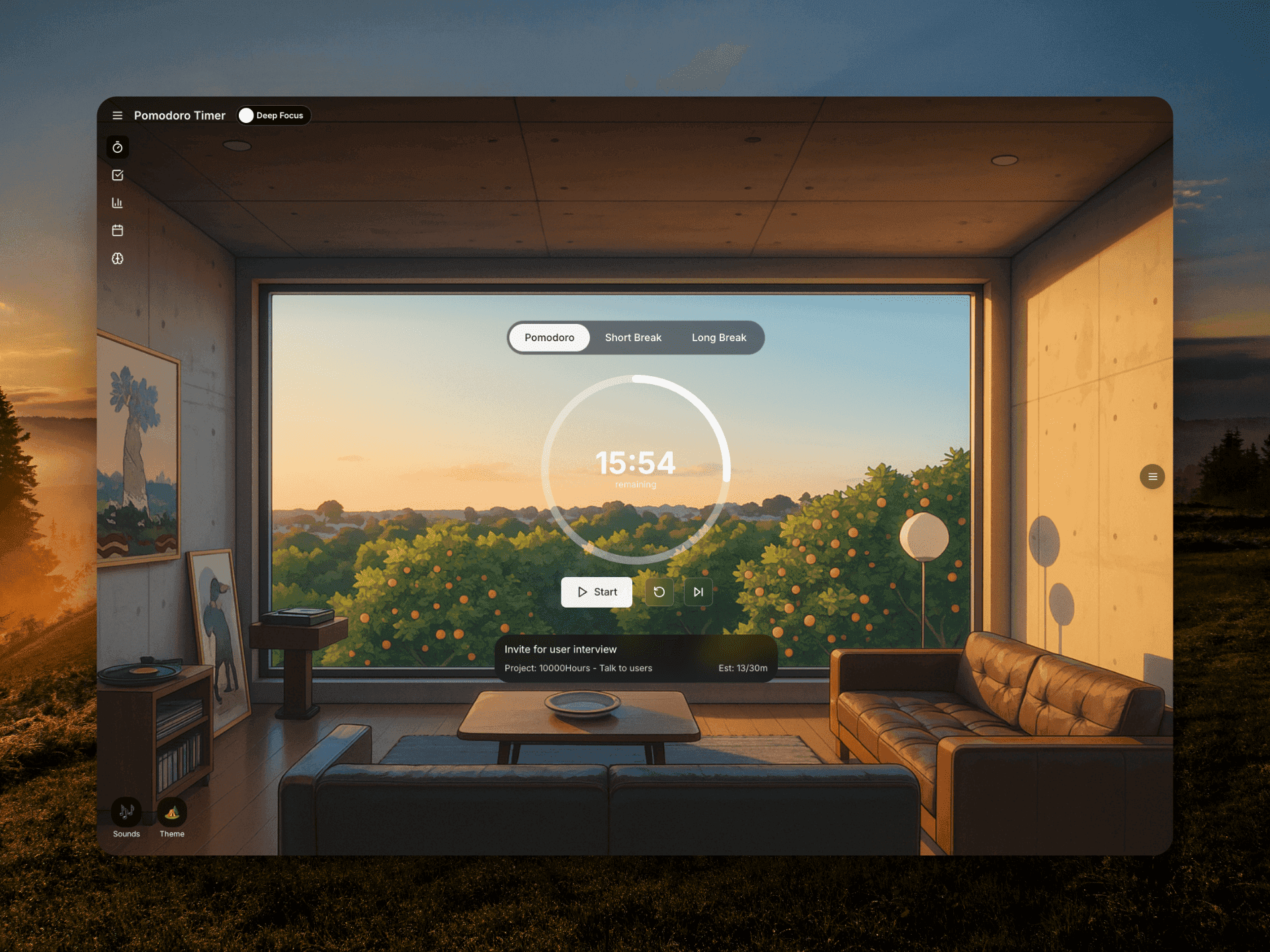
The Pomodoro Technique is a time management method that breaks work into 25-minute focused sessions separated by short breaks. Here is exactly how it works and why the science backs it.
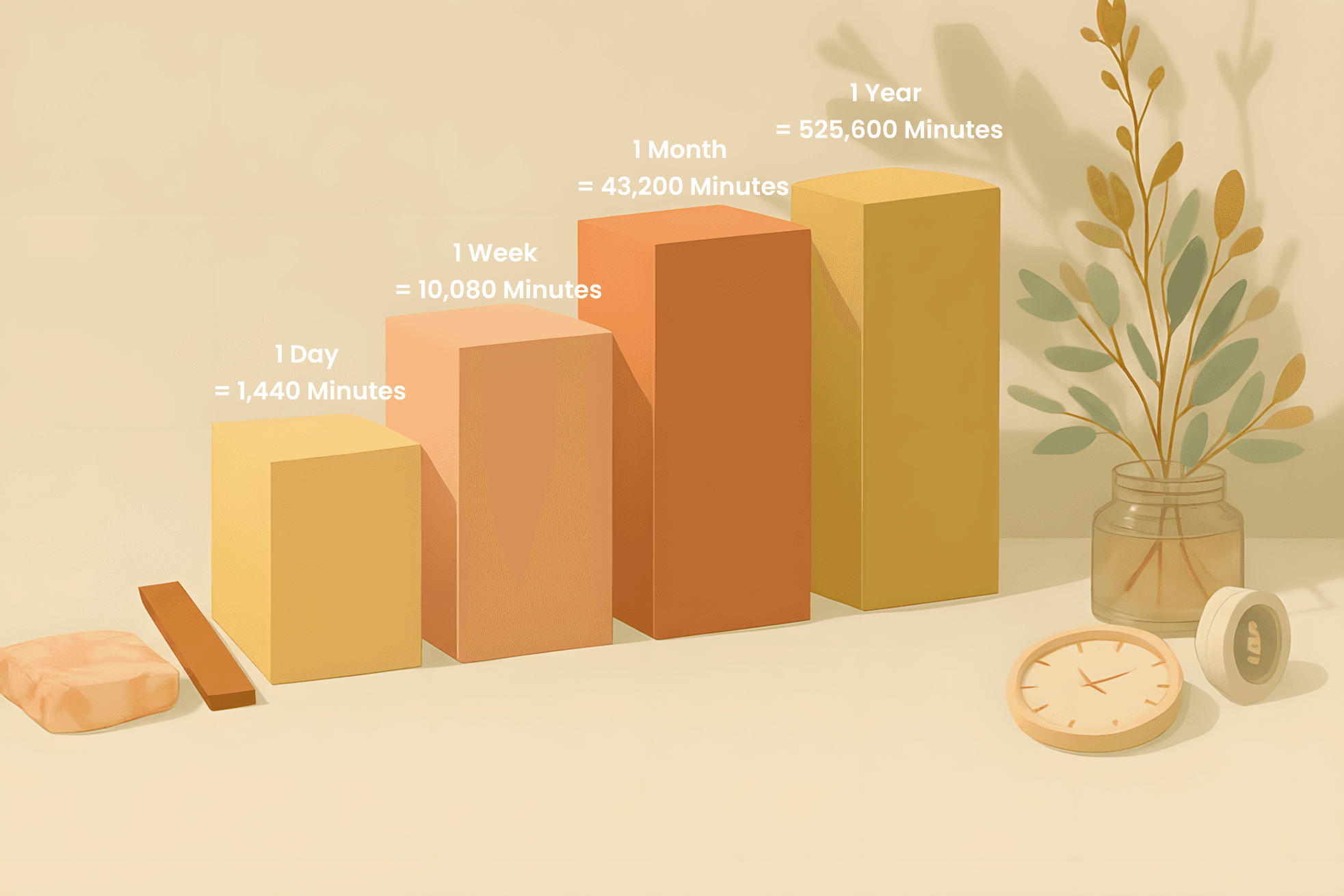
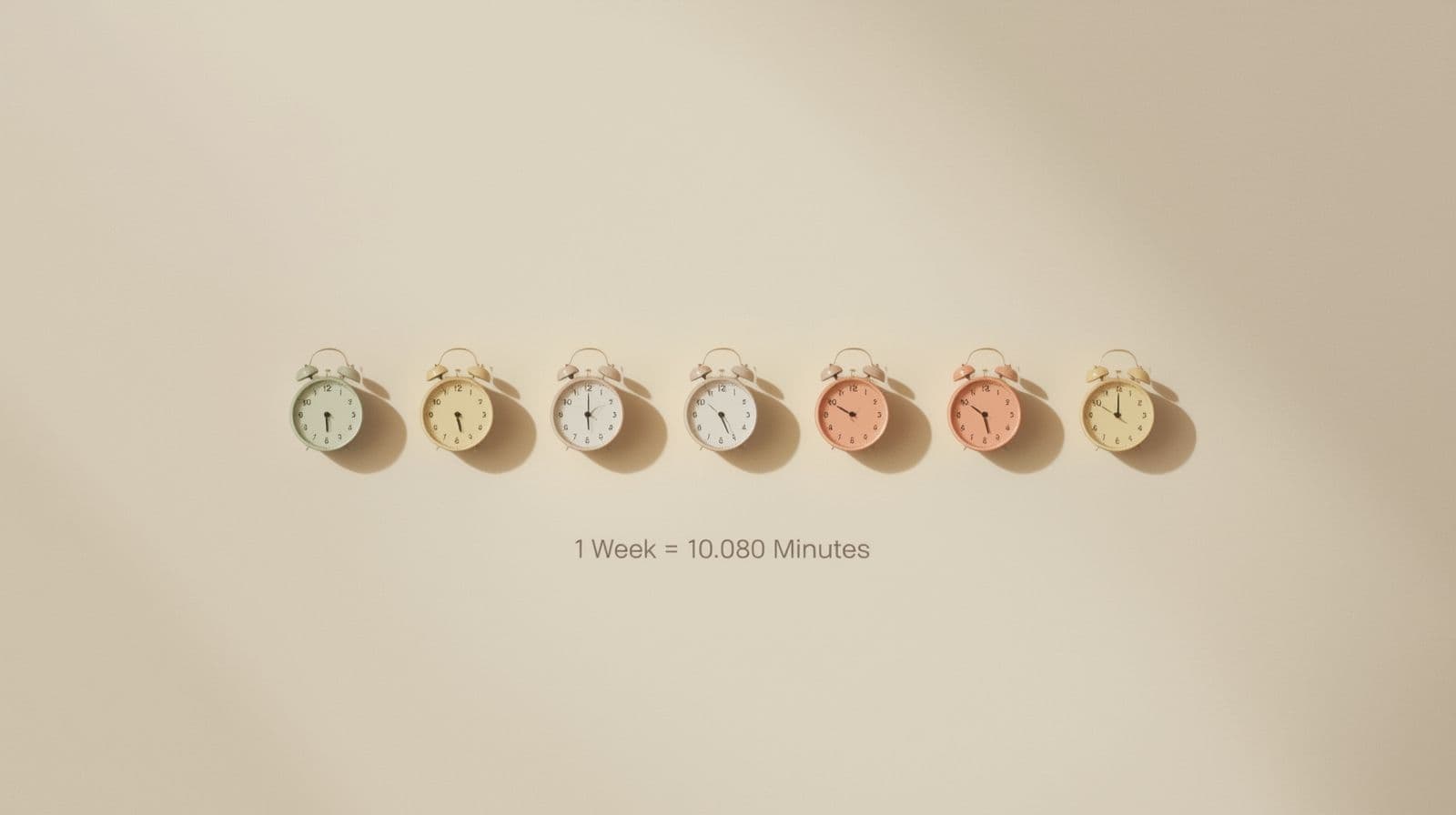
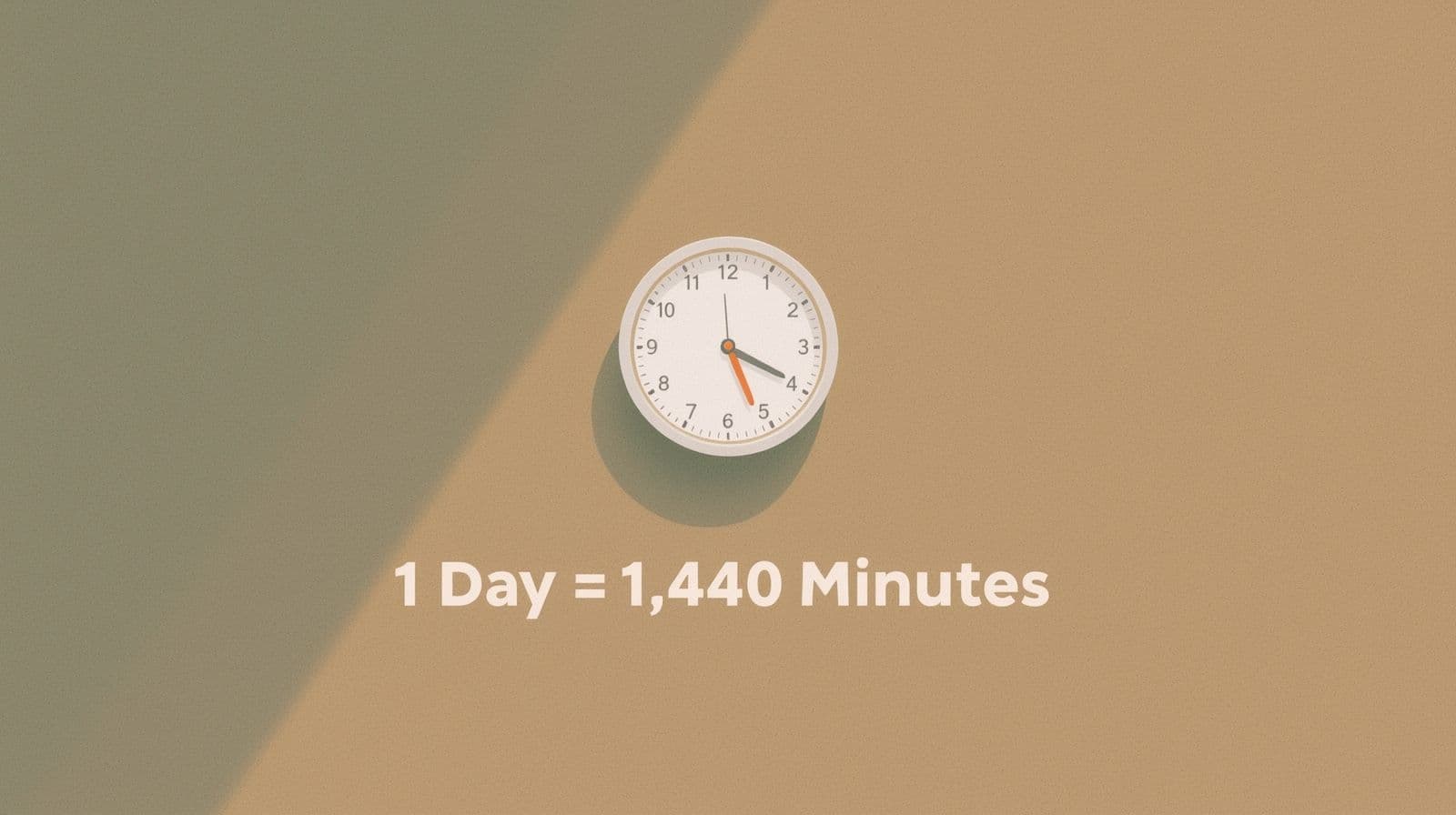
There are 1,440 minutes in a day, 10,080 minutes in a week, about 43,200 minutes in a 30-day month, and 525,600 minutes in a 365-day year.
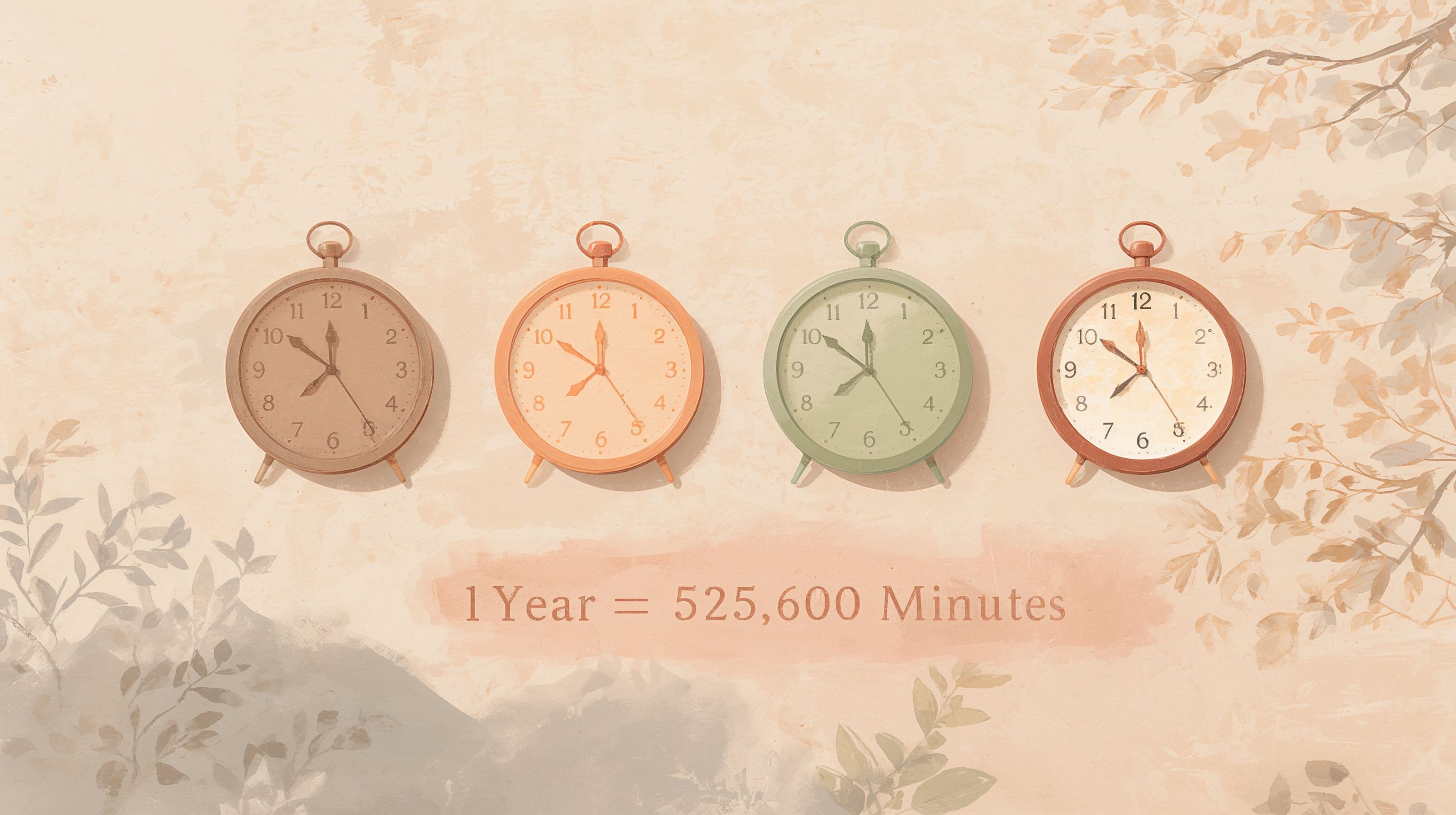
There are 525,600 minutes in a standard 365-day year. Every year gives you 525,600 opportunities to rest, create, and grow.
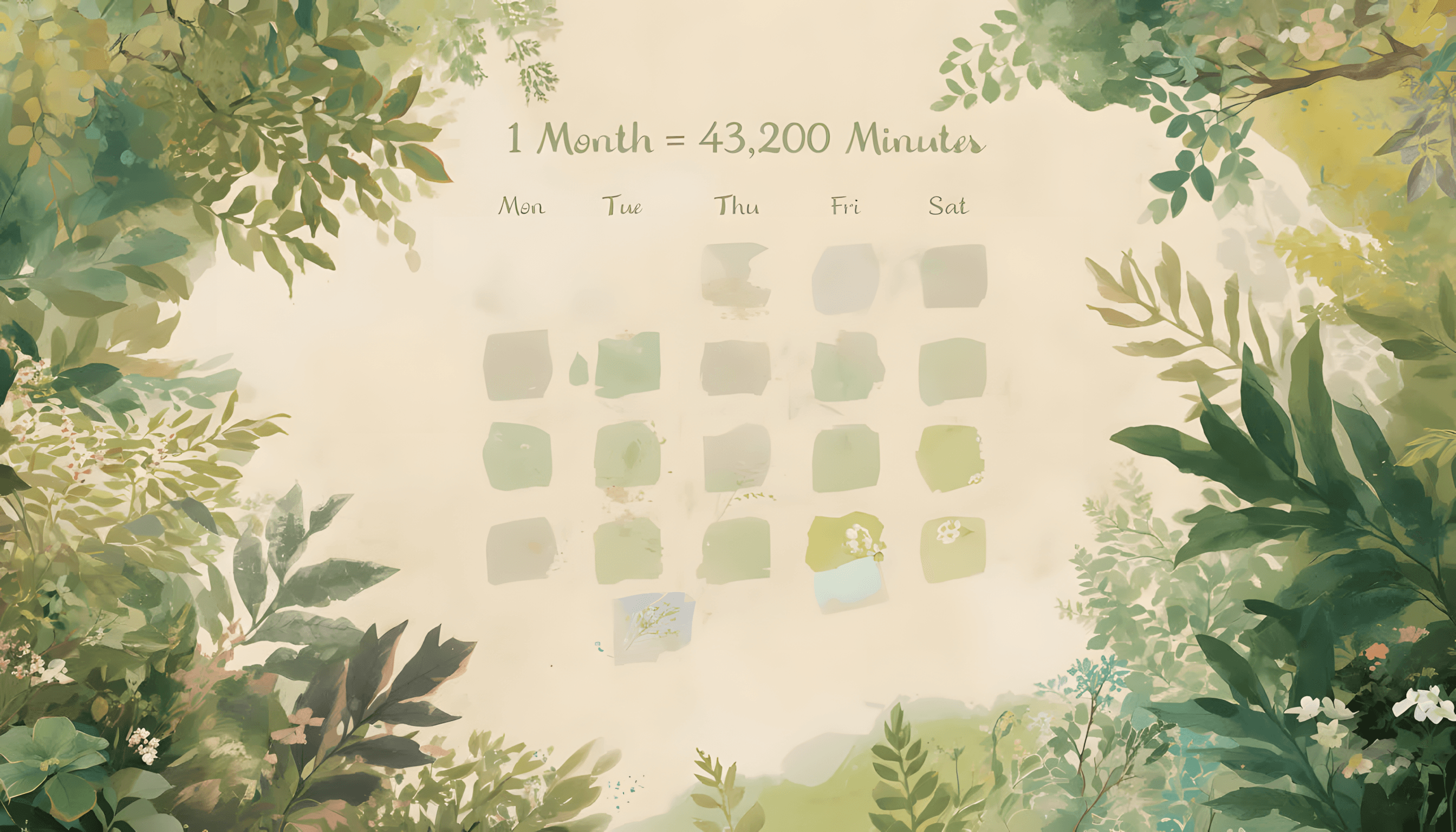
There are 43,200 minutes in a typical 30-day month. How you use those minutes defines your productivity, rest, and growth.
There are 10,080 minutes in a week. Every week gives you 10,080 chances to make progress, to rest, or to focus on what truly matters.
There are 1,440 minutes in 24 hours (a Day). Every morning gives you 1,440 new chances to learn, create, rest, and grow.
A standard full-time job has 2,080 work hours per year, based on 40 hours each week for 52 weeks.
10,000 hours equals roughly 1,250 days if you work 8 hours a day, or about 833 days if you somehow worked 12 hours a day nonstop.