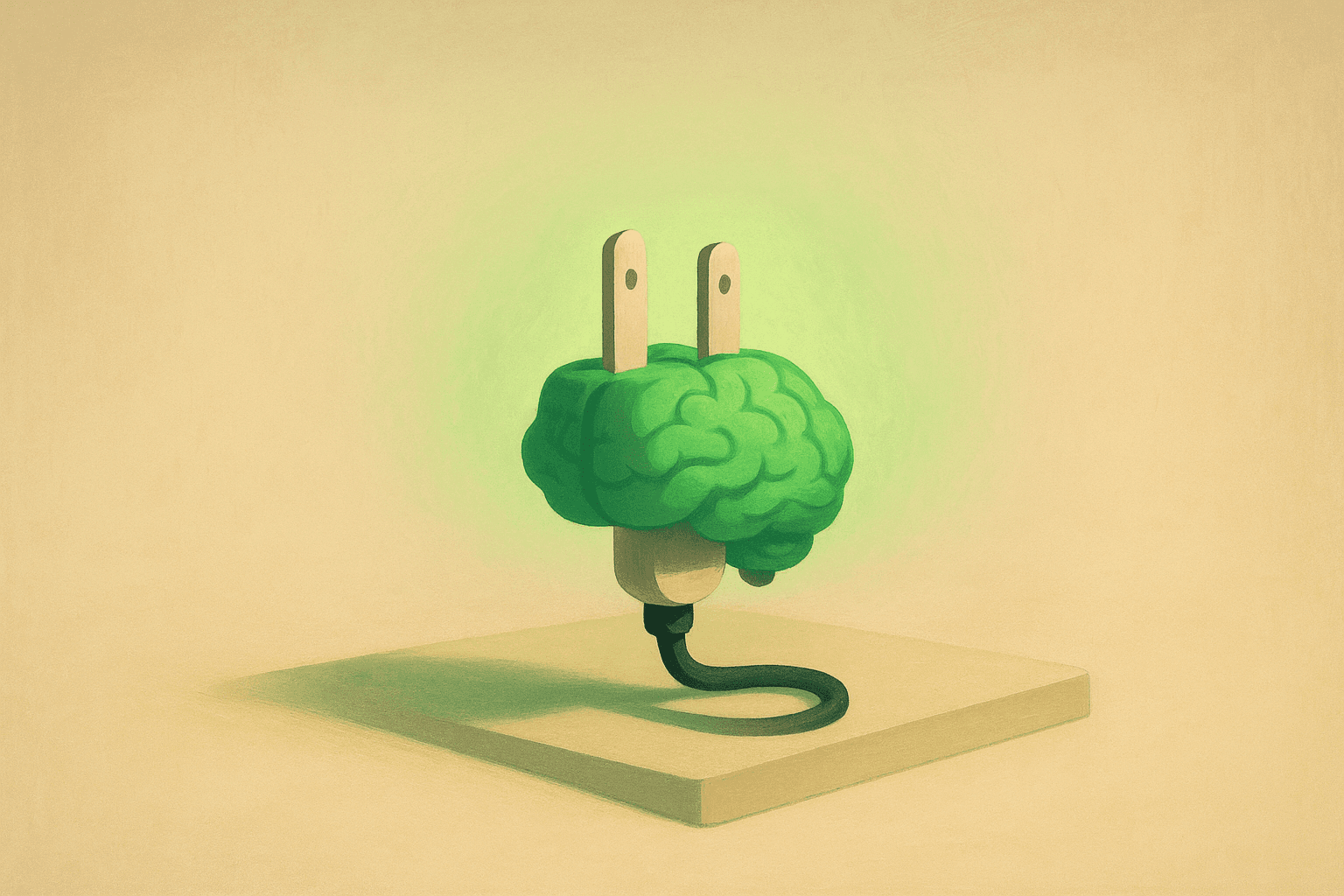
Stoicism productivity means using core Stoic principles, specifically the dichotomy of control, emotional discipline, and present-moment focus, to build consistent output without relying on motivation or mood. Marcus Aurelius ran the Roman Empire while writing daily self-improvement notes. Epictetus achieved mastery over his time while enslaved. Seneca built a body of work that still shapes how millions think. These were not productivity hackers. They were practitioners of a philosophy that happens to produce extraordinary focus. Tools like Make10000Hours add a modern behavioral tracking layer to Stoic practice, letting you verify whether your focus discipline is actually holding across real work sessions.
Table of Contents
- What Is Stoicism (And What It Is Not)
- The Core Principle: Control Your Input, Not Your Output
- Do Less, Better: The Stoic Anti-To-Do-List
- The Stoic Cure for Procrastination: An Emotion Problem
- Negative Visualization: The Technique That Kills Perfectionism
- Memento Mori: How Mortality Awareness Sharpens Focus
- Build a Stoic Daily Routine
- Stoicism vs. Motivation: Why Discipline Beats Inspiration
- Frequently Asked Questions
What Is Stoicism (And What It Is Not)
Stoicism is a Greek and Roman philosophy founded in Athens around 300 BCE by Zeno of Citium. Its core premise is simple: you cannot control what happens to you, but you can always control how you respond. The three major Stoic texts still read today are Marcus Aurelius's Meditations, Epictetus's Discourses and Enchiridion, and Seneca's Letters to Lucilius.
What Stoicism is NOT is emotional suppression. This is the most common and most damaging misconception. Stoicism does not ask you to stop feeling anxiety, frustration, or fear. It asks you to observe those feelings and respond with reason rather than react with impulse. This distinction is clinically significant.
Albert Ellis, the founder of Rational Emotive Behavior Therapy (REBT), explicitly credited Epictetus when developing CBT's core premise. The founding insight of cognitive behavioral therapy, that "it is not things that upset us, but our judgements about things," is a direct quote from Epictetus's Enchiridion, written around 125 CE. A peer-reviewed review in Springer Nature (2024) confirmed the direct philosophical lineage from Stoicism to modern CBT. This means Stoic techniques are not ancient speculation. They are clinically validated tools for managing the cognitive patterns that block productive work.
For knowledge workers dealing with cognitive load from competing demands, Stoicism offers something no productivity app can: a framework for deciding what deserves your mental attention at all.
The four cardinal Stoic virtues apply directly to knowledge work:
1. Wisdom. Knowing what matters and what does not. In practice: distinguishing between tasks that move your real work forward and tasks that feel productive but are not.
2. Courage. Doing the difficult thing without waiting for motivation. In practice: starting the hard task when resistance is highest.
3. Justice. Treating your time and other people's time as genuinely valuable. In practice: keeping meetings short, honoring focused work blocks, and not wasting colleagues' attention.
4. Temperance. Moderation and self-restraint. In practice: not chasing every shiny new tool, framework, or productivity system.
The Core Principle: Control Your Input, Not Your Output
The dichotomy of control is the engine of Stoic productivity. Epictetus states it in the first sentence of the Enchiridion: "Some things are in our control and others not. Things in our control are opinion, pursuit, desire, aversion, and, in a word, whatever are our own actions. Things not in our control are body, reputation, command, and, in one word, whatever are not our own actions."
For knowledge workers, this principle is immediately actionable. You do not control whether your client approves the project, whether the meeting runs over, or whether the algorithm rewards your content. You do control your preparation, your environment, your session start time, and how long you stay focused before checking messages.
Marcus Aurelius wrote: "Concentrate every minute like a Roman on doing what's in front of you with precise and genuine seriousness... freeing yourself from all other distractions." (Meditations 4.3). This is a direct instruction for single-tasking, written roughly 1,850 years before context-switching research quantified the 23-minute recovery cost of interruption.
The practical translation for a knowledge worker:
1. Measure inputs, not just outputs. Did you show up at your desk at 8:30? Did you close all notifications? Did you start the focused session? These are controllable. The word count you produce in that session is less controllable. Make10000Hours tracks your actual focus session data so you can see whether you are consistently controlling the inputs that matter, and where the system breaks down.
2. Rate your effort, not your result. At the end of each work day, ask: did I give my best effort to the work that matters? Not: did the outcome match my expectation?
3. Release the rest. After the session is done, disengage from outcome anxiety. The Stoics called this "preferred indifferents": you prefer success, but you are not attached to it as a condition of your equanimity.
The productivity paradox, documented by organizational researchers, shows that despite dramatic increases in technology and tools since the 1970s, knowledge-worker productivity has not risen proportionally. The Stoic diagnosis is accurate: we have been optimizing for outputs we cannot fully control while neglecting the inputs we can.
Do Less, Better: The Stoic Anti-To-Do-List
Marcus Aurelius gave one of the most actionable productivity instructions in history in four words: "If you seek tranquility, do less." The full passage from Meditations 4.24 continues: "Or, more accurately, do what's essential. Do less, better. Because most of what we do or say is not essential."
This is not a call to laziness. It is a call to ruthless prioritization. Every item you put on a to-do list carries an implicit claim: this is worth my limited time and cognitive bandwidth. The Stoic challenge is to actually justify that claim before the item lands on the list.
The Stoic task audit:
Before adding any task to your day, ask three questions.
1. Is this essential? Not "is this useful" or "would this be nice." Essential means: if this does not happen, something that genuinely matters suffers. Most tasks fail this test.
2. Is this within my control? Tasks that require someone else to act first, respond first, or approve first are not fully in your control. Queue them separately and do not let them block your focused work.
3. What is the cost of not doing this today? If the answer is "nothing significant," the task does not belong in today's schedule.
The Pareto 80/20 principle provides empirical support for the Stoic essentialism argument: roughly 20% of your work activities produce 80% of your meaningful outcomes. The Stoic practice is not finding this 20% once. It is re-identifying it every day, because the urgent and non-essential constantly crowd back in.
Seneca was blunt about the opportunity cost of time scattered across non-essential activity: "It is not that we have a short time to live, but that we waste a great deal of it." He wrote this in his 60s after spending years entangled in Roman court politics he later recognized as mostly noise. The pattern is recognizable in every modern knowledge-work environment.
A Stoic to-do list does not have 27 items. It has three. The three tasks that, if completed, make the day genuinely productive. Everything else is a list of things you might do if the three essential tasks are done.
The Stoic Cure for Procrastination: An Emotion Problem, Not a Time Problem
Modern procrastination research has converged on a finding that Stoic philosophy predicted by 2,000 years: procrastination is not a time-management failure. It is an emotion-regulation failure.
Fuschia Sirois at the University of Sheffield found in 2014 that people procrastinate primarily to avoid the negative emotions associated with a task, not because they lack time or skill. A classic behavioral study cited by Eric Barker found that students in bad moods, given access to fun distractions, spent 14 of their 15 available preparation minutes avoiding the task entirely. The discomfort of starting was less tolerable than the discomfort of failing to prepare.
Seneca named this pattern precisely: "Putting things off is the biggest waste of life: it snatches away each day as it comes, and denies us the present by promising the future." He was describing a cognitive trap, not a moral failing.
The Stoic framework addresses procrastination at its actual root. When you feel resistance to starting a task, the Stoic question is not "how do I manage my time better?" The question is: "what emotion am I trying to avoid, and is avoiding it actually helping?"
Stoic techniques for breaking procrastination:
1. Name the emotion. Resistance is almost always one of three things: fear of failure, fear of judgment, or fear of the discomfort of difficult thinking. Name it specifically. "I am avoiding this report because I am afraid it will not be good enough." Naming removes the vague dread that makes resistance feel overwhelming.
2. Apply the dichotomy of control. The quality of the output is not fully in your control. Your effort, your preparation, and your willingness to start are fully in your control. Focus on those. The Stoic shift is from "I might fail at this" to "I will give my best effort to this."
3. Use the Stoic moment. Marcus Aurelius describes the moment of waking in Meditations 5.1: every morning he had to actively choose to get up rather than stay in bed. He did not wait to feel motivated. He used reason: "I have to go to work as a human being. What do I have to complain of, if I'm going to do what I was born for?" This is the anti-procrastination posture: not motivation, but reasoned commitment to the task itself.
This links directly to analysis paralysis, which shares the same emotional root. Both are fear-avoidance responses, and both respond to the same Stoic reframe: focus on the action you can take now, release the anxiety about the outcome you cannot control.
Negative Visualization: The Technique That Kills Perfectionism
Negative visualization, called premeditatio malorum (premeditation of evils) in Latin, is the Stoic practice of deliberately imagining things going wrong before starting a project or a day. This sounds counterintuitive. It is one of the most effective focus tools in the ancient toolkit.
Seneca instructed: "Let us prepare our minds as if we had come to the very end of life. Let us postpone nothing. Let us balance life's books each day." Marcus Aurelius used a version of this in Meditations 2.1, reminding himself each morning that he would likely encounter difficult, ungrateful, or obstructive people, so that when they appeared, he was prepared rather than derailed.
For knowledge workers, the productively useful form of negative visualization works like this:
Before starting a project or a focused session:
1. Briefly imagine the most likely obstacles. Not catastrophic failure, but realistic friction: the meeting that runs over, the distraction that tempts you, the section of the project that will be harder than expected.
2. Decide in advance how you will respond. "If my notification interrupts my session, I will close it and return to the document without opening anything else." This is called an implementation intention in behavioral psychology and has consistent research support for increasing follow-through.
3. Release attachment to perfection. Negative visualization cures perfectionism because it pre-accepts imperfection. The Stoic is not surprised by obstacles. The Stoic anticipated obstacles and prepared for them. The work does not need to be perfect to move forward. It needs to be done.
This technique is particularly valuable for ADHD-driven procrastination, where the gap between intention and action is often bridged by reducing the surprise and emotional weight of starting.
Memento Mori: How Mortality Awareness Sharpens Focus
Memento mori ("remember that you will die") is the Stoic practice of regularly acknowledging mortality, not to create despair, but to create urgency. Marcus Aurelius wrote in Meditations 2.11: "Of human life the time is a point, and the substance is in a flux, and the perception dull, and the composition of the whole body subject to putrefaction."
This is not nihilism. It is the most powerful anti-procrastination argument available. If your time is finite and non-renewable, then every hour spent on non-essential reactive work is an irreversible choice. No productivity hack creates this sense of urgency. The Stoics argued that most people live as though they have infinite time and are shocked when they do not.
Seneca's essay On the Shortness of Life is essentially a 2,000-year-old case study in how knowledge workers misallocate their finite hours. He writes of the people who say they will start the meaningful work "later" after the current crisis passes, after the project is done, after the meeting season ends. Seneca's observation: "Later" is the mechanism by which people hand their lives to others.
Practical memento mori for knowledge workers:
1. Weekly time audit. At the end of each week, account for where your hours went. Not to feel guilty, but to see clearly. A logged record of actual focus hours versus reactive hours is the modern version of the Stoic time reckoning. Make10000Hours generates this record automatically from your actual computer activity, so the picture is accurate rather than a best guess.
2. The "one year" question. Before accepting a new commitment, ask: "Will I be glad I spent this time on this in one year?" Most of the low-stakes reactive tasks that fill knowledge-work days fail this test immediately.
3. Start the meaningful work first. Marcus Aurelius did not begin his day by clearing his inbox. The Meditations themselves were written before the day's administrative demands arrived. The most important work goes first, when mortality awareness is freshest.
Build a Stoic Daily Routine
No top-10 competitor for this topic offers a complete morning-to-evening Stoic routine. Here is one grounded directly in the Stoic texts:
Morning (30 minutes before work begins):
Marcus Aurelius describes his morning discipline in Meditations 5.1. He would argue with himself when tempted to stay in bed. His practice: wake, name the day's purpose, and begin without theatrical preparation. In practice:
1. Morning review. Before opening any device, spend 5 minutes writing or thinking through: what is the most important work today? What obstacles might arise? How will I respond? (This is premeditatio malorum in a low-stakes daily form.)
2. Single-task intention. Choose one task that matters most. Name it specifically. It goes first before messages, meetings, or reactive work.
Work sessions:
Seneca on session structure: "Withdraw into yourself as much as you can with those who will make you better. Keep company with those who are likely to improve you." The modern translation: choose your focus environment deliberately, and protect it actively.
1. Block your focused sessions. Time blocking is the structural implementation of the Stoic instruction to concentrate on what is in front of you. 90-minute blocks align with ultradian rhythms. 25-minute Pomodoro sessions work for tasks requiring frequent resets.
2. Single input at a time. Marcus Aurelius practiced what researchers now call monotasking. One task. Undivided attention. No tab-switching. No message-checking. "Concentrate every minute like a Roman on doing what's in front of you."
3. Log your sessions. The Stoic daily review is data-driven when you have session logs. Make10000Hours tracks your actual computer activity across your work sessions, giving you an honest record of where your time and attention went. This is the behavioral accountability layer that pure philosophy lacks.
Evening (Stoic journaling):
Marcus Aurelius wrote the Meditations as private evening journals. He did not publish them. They were a daily practice of self-examination. Seneca also practiced evening review, asking three questions derived from his Stoic practice:
1. What did I do wrong today?
2. What did I do right?
3. What can I do better tomorrow?
This is not self-punishment. It is the Stoic feedback loop: honest assessment without ego protection, leading to genuine improvement.
Stoicism vs. Motivation: Why Discipline Beats Inspiration
The most common question about Stoic productivity is: "But what if I don't feel motivated?"
The Stoic answer is blunt: motivation is irrelevant. Marcus Aurelius did not wait to feel motivated to write the Meditations. He wrote them at dawn in a military camp on the Danube frontier, governing an empire, while managing a plague. The text itself is evidence that he felt reluctant, tired, and doubtful on many of these mornings. He wrote anyway.
The Stoic distinction is between external motivation (waiting for the right mood, the right moment, the right conditions) and internal discipline (choosing to act because the action is aligned with your values and responsibilities). External motivation is unreliable by definition. It depends on things outside your control: how you slept, how the meeting went, what someone said to you. Internal discipline depends only on the decision you make right now.
"We are what we repeatedly do," Aristotle observed. The Stoics operationalized this insight: virtue is not a feeling. It is a practice. You do not feel your way into virtuous action. You act your way into a virtuous character.
A peer-reviewed study published in PMC (2019) tested amor fati, the Stoic acceptance of one's circumstances, as a positive psychology construct and found it showed statistically significant additional variance in psychological adjustment outcomes above standard well-being measures. The Stoics were not just philosophizing. They were building the psychological infrastructure for sustained performance.
Three practices that replace motivation:
1. Pre-commitment. Decide your work schedule before the moment of resistance arrives. Block the time. Tell someone. Set the environment. When resistance comes, the decision is already made.
2. Identity anchoring. The Stoic asks: "What would a person who is doing serious, focused work do right now?" Not "what do I feel like doing?" Identity-based behavior is more stable than motivation-based behavior.
3. Track the practice, not the inspiration. A logged record of focused hours is a more honest and more motivating signal than how you feel about your work on any given day. A week of consistent 4-hour focus sessions builds more confidence than the best motivational speech.

Frequently Asked Questions
What is stoicism productivity?
Stoicism productivity means applying Stoic philosophy, specifically the dichotomy of control, emotional discipline, and present-moment focus, to produce consistent knowledge-work output. The core insight is that sustainable productivity comes from controlling your inputs (preparation, environment, effort) rather than obsessing over outputs (results, reception, metrics) that are only partially within your control. Stoic practitioners like Marcus Aurelius and Seneca were prolific producers not because they had better tools, but because they had a clear philosophy of attention and effort.
How does the dichotomy of control improve focus at work?
The dichotomy of control improves focus by narrowing your attention to the actions you can actually take right now. When you clearly identify that your task start time, your environment setup, and your session length are within your control, and that your client's reaction, your colleague's approval, and the algorithm's reward are not, you stop burning cognitive energy on the uncontrollable. This frees working memory for the actual work. Research on cognitive load shows that decision fatigue and uncertainty are major drains on focus. The dichotomy of control systematically reduces both.
What did Marcus Aurelius teach about productivity and time management?
Marcus Aurelius taught three core productivity principles in the Meditations. First, do what is essential and cut everything else: "If you seek tranquility, do less. Or, more accurately, do what's essential." Second, concentrate completely on the present task: "Concentrate every minute like a Roman on doing what's in front of you with precise and genuine seriousness." Third, act without waiting for ideal conditions: the Meditations 5.1 dawn passage shows him reasoning himself out of bed every morning rather than waiting to feel ready. His practice was not time management. It was attention management.
How does stoicism help with procrastination?
Stoicism addresses procrastination at its root cause: emotion avoidance. Modern research (Fuschia Sirois, University of Sheffield, 2014) confirms that people procrastinate to avoid the negative emotions associated with difficult tasks, not because they lack time. Stoic practice directly targets this mechanism. The dichotomy of control reframes procrastination: you cannot control whether the work will be perfect, but you can control whether you start. Premeditatio malorum (pre-imagining obstacles) reduces the surprise and emotional weight of starting. The Stoic identity question, "what would someone who does serious work do right now?", bypasses the motivational system entirely and triggers behavior from values instead.
Can stoicism replace motivation?
Stoicism does not replace motivation. It makes motivation irrelevant. Stoic discipline means committing to action based on values and responsibilities rather than waiting for a favorable mood. Marcus Aurelius's Meditations are full of passages where he clearly did not feel motivated to do his work. He did it anyway, using reason as the mechanism rather than feeling. The practical tool for building this discipline is pre-commitment: decide your focus schedule in advance, block the time, and use a tracking layer like Make10000Hours to hold yourself accountable to the logged record rather than your momentary energy level.
What is negative visualization and how does it help at work?
Negative visualization (premeditatio malorum) is the Stoic practice of briefly imagining things going wrong before starting work. It sounds pessimistic. It produces the opposite effect. By pre-imagining realistic obstacles, you prepare responses in advance (implementation intentions), reduce the emotional weight of obstacles when they arrive, and release perfectionism by accepting imperfection before you begin. In practice: before a focused session, spend two minutes writing the most likely interruptions and distraction risks you will face, and decide how you will respond. This preparation makes you significantly more likely to hold your focus when the predicted friction arrives.
Is stoicism similar to cognitive behavioral therapy?
Yes, more than similar. Cognitive behavioral therapy (CBT) is a direct descendant of Stoic philosophy. Albert Ellis, the founder of Rational Emotive Behavior Therapy (one of the two main CBT modalities), explicitly credited Epictetus as his primary philosophical source. The CBT premise that thoughts, not events, drive emotional responses is a restatement of Epictetus's Enchiridion opening: "It is not things that disturb us, but our judgements about things." A 2024 review in Springer Nature confirmed this lineage as academically documented. This matters for productivity: Stoic practices are not untested philosophy. They are clinically validated cognitive restructuring techniques applied at the level of daily work behavior.
How do you build a stoic morning routine?
A Stoic morning routine follows the structure Marcus Aurelius describes in Meditations. Wake without delay and name the day's purpose immediately. Spend 5 minutes on premeditatio malorum: what is the most important work today and what obstacles might arise? Write or speak your single most important task for the day. Begin that task before opening messages or attending to reactive demands. Seneca's instruction was to protect the first hours of the day from other people's agendas. The morning routine that follows this structure consistently produces more focused output than a routine that begins with inbox-clearing.
The Stoics built a philosophy for uncertain, demanding, high-stakes environments. Marcus Aurelius was governing a declining empire. Seneca was managing a politically dangerous emperor. Epictetus was enslaved. They did not have productivity apps. They had a clear mental framework for where to direct their limited time and attention. That framework holds up in a knowledge-work environment because the core problem is the same: finite hours, infinite demands, and the need to choose wisely.
Start tracking whether Stoic discipline is actually working in your focus sessions. Make10000Hours monitors your real computer activity, shows you where your focused hours are going, and gives you the honest behavioral data that a pure philosophy practice cannot. The Stoic daily review is more powerful when the log is accurate.
For more on applying Stoic principles to specific work contexts, read Stoic Principles for Work and Marcus Aurelius Productivity Quotes.
Related articles