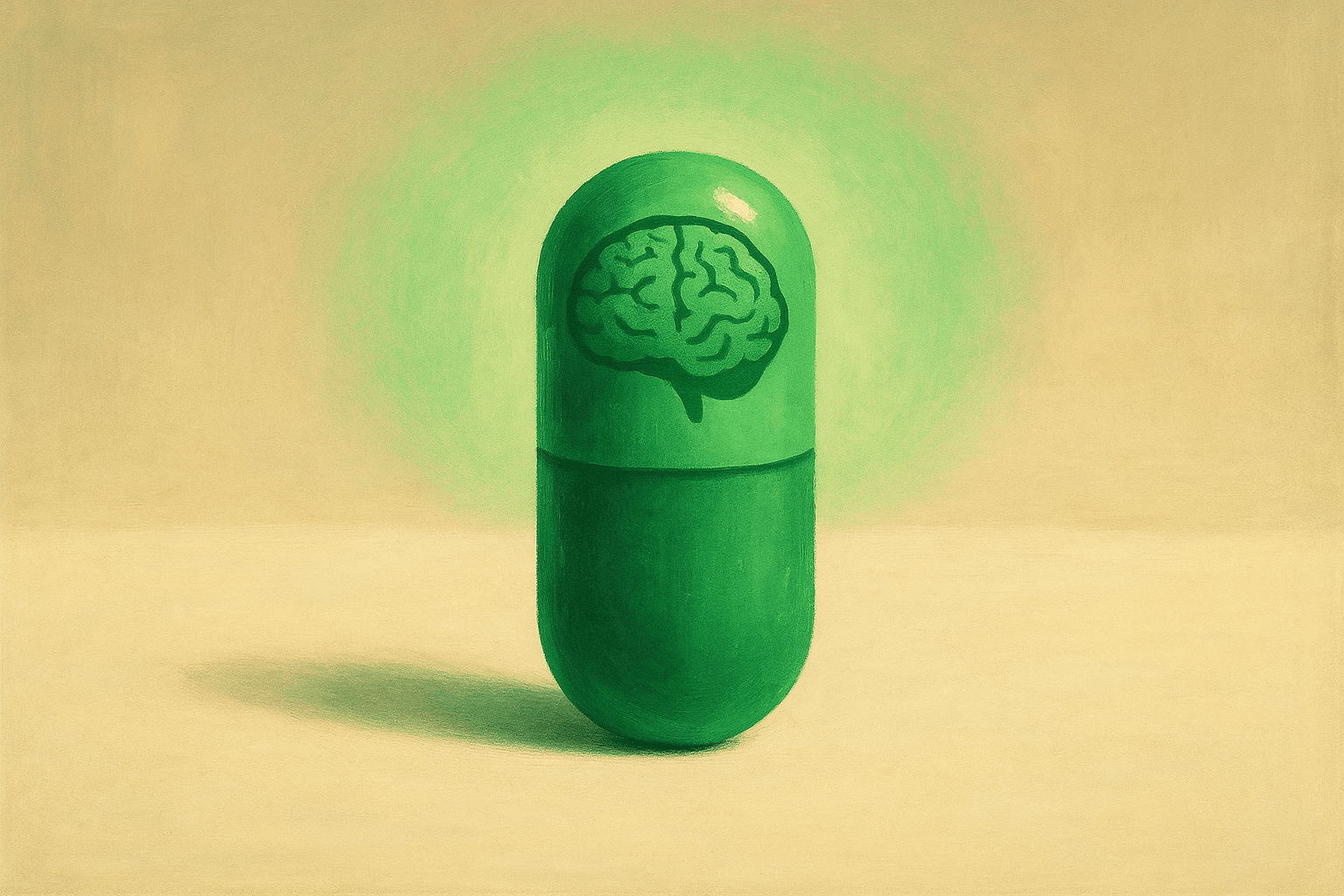
A second brain is an external system that stores your ideas, commitments, and reference material so your biological brain can focus on thinking instead of remembering. The concept was popularized by Tiago Forte, but the underlying principle is older than any app: your working memory has hard limits, and every open loop you hold in your head competes for the same finite bandwidth. When you offload capture and retrieval to a trusted system, you reduce cognitive load and create space for deeper work. The question most guides skip is whether the system is actually working. Make10000Hours acts as the behavioral measurement layer that tells you whether your second brain is reducing cognitive overhead or just adding another tool to manage.
What a Second Brain Actually Is
The term "second brain" comes from Tiago Forte's Building a Second Brain (BASB) methodology. His book reached over 500,000 readers in 25+ languages and became a Wall Street Journal bestseller. The core premise is simple: your brain is for having ideas, not storing them.
A second brain is a trusted, organized digital repository where you capture everything that matters and retrieve it when you need it. It sits outside your biological memory. It lives in a note-taking app, a knowledge base, or a project management tool. The specific app does not matter. What matters is the behavior: consistently moving information out of your head and into a system you trust.
Forte built the methodology around a four-step process called CODE:
1. Capture. Save only what resonates. Not everything you encounter, just the ideas, quotes, insights, and commitments that feel genuinely useful or interesting. The bar for capture should be low enough that you actually do it, but high enough that your system does not become a junk drawer.
2. Organize. Sort captured notes into actionable categories. Forte's organizational framework is the PARA method: Projects (active deliverables with deadlines), Areas (ongoing responsibilities), Resources (topics of interest), and Archives (completed or inactive items). PARA works because it organizes by actionability, not by topic. You file things where you will use them, not where they "belong" taxonomically.
3. Distill. Summarize notes progressively so that future-you can extract the key insight in seconds. Forte calls this Progressive Summarization: you bold the key passages on first review, highlight the boldest lines on second review, and write a brief executive summary on third review. Each pass reduces friction for future retrieval.
4. Express. Use your stored knowledge to create output. A second brain is not an archive. It is a thinking tool. If you only capture and organize but never express, you have built a digital attic, not a productivity system.
The Neuroscience Case for Externalizing Your Memory
The scientific basis for a second brain starts with George Miller's 1956 paper "The Magical Number Seven, Plus or Minus Two." Miller demonstrated that human short-term memory can hold roughly seven items at once. Later research revised that number downward for complex information: most adults can actively hold about four chunks of novel information in working memory at any given time.
This means every open task, unprocessed email, and half-formed commitment sitting in your head occupies one of those slots. When all four slots are full, new information pushes out old information. You forget the thing you were supposed to do. You lose the context you need for the decision in front of you. You feel overwhelmed not because the work is hard but because your working memory is full.
Cognitive offloading is the formal term for what a second brain does. Researchers at the University of Waterloo have studied this extensively. Their findings show that offloading information to external tools (notes, reminders, written plans) reliably improves task performance. The tradeoff is that it weakens internal memory traces for the offloaded content. But for knowledge workers, that tradeoff is a feature. You do not need to memorize every project detail. You need to retrieve it quickly and keep your working memory free for synthesis, problem-solving, and creative connections.
A 2024 study published in Cognition confirmed that cognitive offloading is a value-based decision. People naturally offload more as task complexity increases, because the cognitive effort of internal storage outweighs the cost of using an external tool. This is exactly what happens when knowledge workers adopt second brain systems: the volume and complexity of information they handle exceeds what biological memory can reliably manage, so they externalize.
A 2025 meta-analysis on PubMed found that the performance benefit of cognitive offloading is consistent across forced and voluntary conditions. The research supports what second brain practitioners report anecdotally: externalizing information genuinely frees up cognitive capacity for higher-order work.
The McKinsey Global Institute has estimated that knowledge workers spend an average of 9.3 hours per week searching for information. A well-built second brain directly attacks that retrieval cost. When your notes are organized by actionability (not scattered across 14 apps), you find what you need in seconds instead of minutes.
Second Brain vs PKM vs Note-Taking App
These three terms get used interchangeably, but they describe different things.
| Note-Taking App | PKM System | Second Brain | |
|---|---|---|---|
| What it is | A tool (Notion, Obsidian, Apple Notes) | A practice of managing personal knowledge | A specific methodology for externalizing cognitive work |
| Scope | Capturing text and media | Capturing, organizing, retrieving, and sharing knowledge | Capturing, organizing, distilling, and expressing knowledge for creative output |
| Organizational framework | Folders, tags, or none | Varies (Zettelkasten, PARA, custom) | CODE + PARA (Forte's framework) or similar |
| Goal | Record information | Manage what you know | Reduce cognitive load and produce creative output |
| Failure mode | Becomes a junk drawer | Becomes an over-engineered archive | Becomes a collection system with no expression step |
A note-taking app is a tool. A PKM system is a practice. A second brain is a specific methodology within PKM that prioritizes actionability and creative output over pure knowledge storage.
The distinction matters because most people who say "I tried building a second brain and it didn't work" actually mean "I downloaded Notion and made a bunch of folders." That is a note-taking app, not a second brain. A second brain requires the behavioral layer: consistent capture, actionable organization, progressive distillation, and regular expression.
Digital minimalism applies here. The goal is not to use more tools. The goal is to use fewer tools more intentionally. One well-structured app beats five apps with overlapping purposes.
How to Build a Minimal Second Brain That Actually Gets Used
Most second brain systems fail because they are too complicated. People spend weeks designing elaborate Notion databases, custom Obsidian plugins, or interconnected Zettelkasten structures before they capture a single useful note. Then the system feels like a burden instead of a tool, and they abandon it within a month.
The fix is to start minimal and expand only when you feel a genuine gap. Here is the bare-minimum build:
1. Pick one app. Notion, Obsidian, Apple Notes, Logseq, or anything that syncs across your devices. The app matters far less than the habit. Do not spend more than 30 minutes choosing.
2. Create four top-level folders using PARA. Projects (active work with deadlines), Areas (ongoing responsibilities like health, finances, career development), Resources (topics you are learning about), and Archives (anything finished or paused). For a deeper breakdown, read the full PARA method guide.
3. Set one daily capture habit. At the end of each work session, spend two minutes moving anything worth keeping from your head, browser tabs, or messages into your system. File each item into the correct PARA folder. If you cannot decide where it goes, put it in Resources and move on.
4. Do a weekly review. Once a week, scan your Projects folder. Move anything completed to Archives. Move anything stalled to Areas or Resources. Capture any new commitments that are living in your head. This 15-minute review is the single most important habit in the entire system. Without it, your second brain becomes a write-only database.
5. Use Progressive Summarization on anything you revisit. The first time you return to a note, bold the most important lines. The second time, highlight the boldest. The third time, write a one-sentence summary at the top. This makes retrieval fast without requiring upfront effort during capture.
6. Express regularly. The purpose of your second brain is output: decisions, documents, presentations, code, writing, plans. If you are not pulling from your system to create things, the system is not working. Schedule one "express" session per week where you open your Projects folder and ask: what can I ship using what I already know?
This minimal system takes less than 20 minutes to set up and less than 30 minutes per week to maintain. It is deliberately boring. Boring systems get used. Elaborate systems get admired and then abandoned.
How to Know If Your Second Brain Is Actually Working
This is the gap that every second brain guide skips. Forte's methodology tells you how to build the system. Nobody tells you how to measure whether it is reducing your cognitive overhead.
Here is the testable claim: if your second brain is working, your cognitive load should decrease over time. That decrease shows up in your behavior. Your focus sessions should get longer because fewer background mental threads are competing for working memory. Your context switch rate should drop because you are not bouncing between apps trying to find information. Your work efficiency should increase because retrieval is faster.
These are observable, trackable changes. Make10000Hours measures exactly these signals. It tracks your actual focus session duration, detects context switches, and shows you behavioral patterns over time. If you build a second brain in January and your average focus session length increases by February, you have evidence that the system is working. If nothing changes, the system needs adjustment.
The 2025 research on tool trust and cognitive offloading supports this. Researchers found that trust in your tools moderates how willing you are to offload. When you see data confirming that your system is actually freeing up cognitive capacity, your trust in the system increases, which makes you more likely to use it consistently. Measurement creates a positive feedback loop.
Without measurement, you are operating on faith. You built the system, it feels good, but you have no idea whether it is changing your behavior. Most productivity systems fail at this step. They promise transformation but offer no way to verify it.
Track these three metrics after you set up your second brain:
1. Average focus session length. Are your uninterrupted work sessions getting longer week over week?
2. Context switch frequency. Are you switching between apps and tasks less often during deep work blocks?
3. Retrieval time. When you need a piece of information, how quickly can you find it? If you are still searching for 5+ minutes, your organizational structure needs work.
The Biggest Second Brain Mistakes
1. Building an archive instead of a thinking tool. The most common failure mode is capturing everything and expressing nothing. Your second brain should feel like a workshop, not a warehouse. If your last 50 notes are all inbound (captured articles, saved links, bookmarked quotes) and zero are outbound (drafts, plans, decisions, deliverables), the system is not functioning as intended.
2. Over-engineering the structure before you have content. People build elaborate tag systems, custom properties, relational databases, and automated workflows before they have 50 notes. Start with four PARA folders and plain text. Add structure only when the lack of structure causes a specific, repeatable problem.
3. Choosing the tool over the habit. App-switching is the second brain equivalent of rearranging your desk instead of doing work. Pick one tool. Use it for 90 days. Only switch if you encounter a genuine structural limitation that prevents you from capturing, organizing, distilling, or expressing.
4. Skipping the weekly review. Without a regular review habit, your second brain fills up with stale information. Projects stay active after they are done. Commitments get buried. The system loses trust because it no longer reflects reality. The weekly review is what keeps the system alive.
5. Not measuring whether it works. Feeling productive and being productive are different things. If you cannot point to a behavioral change (longer focus sessions, fewer context switches, faster retrieval) after 30 days of using your second brain, something in the system is not working. Adjust the capture habit, simplify the structure, or change the review cadence. Do not just keep adding notes and hoping for the best.
The PARA Method as the Organizational Backbone
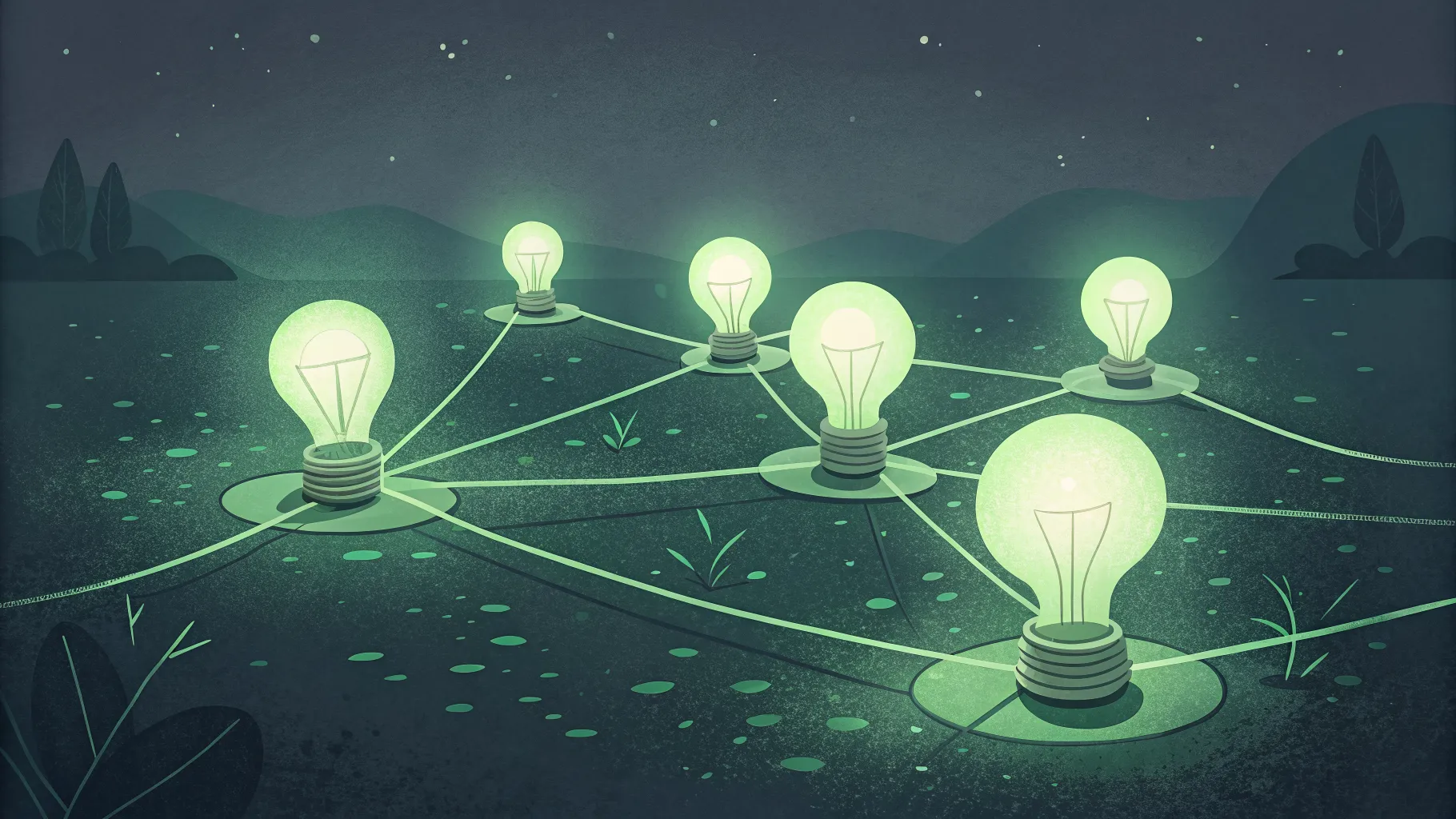
The PARA method deserves its own section because it is the structural foundation that makes a second brain actionable instead of chaotic. PARA stands for Projects, Areas, Resources, and Archives. Tiago Forte designed it as a universal organizing system that works across any note-taking tool.
The key insight of PARA is that it organizes information by actionability, not by topic. Traditional folder systems group notes by subject: "Marketing," "Engineering," "Personal." PARA groups them by how soon you need them: Projects are active now, Areas are ongoing, Resources are reference material, and Archives are done.
This distinction matters because knowledge workers do not search for information by topic. They search for it by context: "What do I need for the project I am working on right now?" PARA puts that answer one click away.
For a complete implementation guide, including how to set up PARA in Notion, Obsidian, or any other app, read the PARA method post.
The connection between PARA and single-tasking is direct. When everything in your Projects folder is a current deliverable and everything else is filed elsewhere, you can open one project and work on it without seeing 47 other things competing for your attention. PARA reduces visual and cognitive clutter at the organizational level.
How a Second Brain Supports Flow States
A well-built second brain does not just reduce cognitive load. It also removes the micro-interruptions that prevent flow states from forming.
Flow requires sustained attention on a single task for an extended period. Every time you pause work to search for a piece of information, remember a commitment, or figure out what to do next, you break the flow state. Re-entering flow after an interruption takes an average of 15 to 25 minutes.
A second brain prevents these interruptions in three ways. First, it removes the "I need to remember this" thought loops that pull attention away from the current task. If everything worth remembering is captured, your brain stops generating reminders. Second, it makes retrieval fast. When you need a reference, you find it in seconds instead of minutes, keeping the interruption short enough that flow is not fully broken. Third, your weekly review ensures you always know what to work on next, eliminating the "what should I do now?" decision cost at the start of each work block.
Frequently Asked Questions
What is a second brain?
A second brain is an external, digital system for capturing, organizing, and retrieving your ideas, notes, and commitments. The concept was popularized by Tiago Forte's Building a Second Brain methodology. The goal is to free your biological working memory for thinking, creating, and problem-solving by storing everything else in a trusted external system.
How do you build a second brain for productivity?
Start with one note-taking app, create four folders using the PARA method (Projects, Areas, Resources, Archives), and establish two habits: daily capture (2 minutes at the end of each work session) and a weekly review (15 minutes scanning your Projects folder). This minimal setup takes less than 20 minutes to create and less than 30 minutes per week to maintain.
What is the difference between a second brain and a note-taking app?
A note-taking app is a tool. A second brain is a behavioral system. You can use a note-taking app without a second brain (most people do). A second brain requires consistent capture, actionable organization via PARA, progressive distillation of notes, and regular expression of knowledge into creative output. The app is just the container.
Does a second brain actually improve focus?
The neuroscience supports it. Cognitive offloading research shows that externalizing information to external tools frees up working memory capacity. George Miller's research established that working memory holds roughly 4 to 7 items at once. Every idea, commitment, or task you move out of your head and into a trusted system opens a slot for focused thinking. You can verify this by tracking your focus session length before and after adopting a second brain system using a tool like Make10000Hours.
What tools are best for building a second brain?
Forte's methodology is tool-agnostic. Popular options include Notion, Obsidian, Logseq, Roam Research, Apple Notes, and Evernote. The best tool is the one you will actually use consistently. Avoid spending more than 30 minutes choosing. The habit matters more than the app.
Why do most second brain systems fail?
The most common failure is building an archive instead of a thinking tool. People capture everything and express nothing. The second most common failure is over-engineering the structure before having enough content to justify it. The fix for both is to start minimal (four PARA folders, plain text notes) and focus on the expression step: regularly pulling from your system to produce actual work output.
How do you know if your second brain is reducing cognitive overhead?
Track three behavioral metrics: average focus session length, context switch frequency, and information retrieval time. If your focus sessions are getting longer, your context switches are decreasing, and you can find information faster after 30 days, your second brain is working. Make10000Hours tracks focus session duration and context switch patterns automatically, giving you objective data on whether the system is making a measurable difference.
Your second brain should reduce the noise inside your head so that more of your cognitive capacity goes toward the work that matters. If you have built the system but you are not sure whether it is changing your behavior, start measuring. Make10000Hours tracks your focus sessions, detects context switches, and shows you whether your cognitive overhead is actually decreasing over time. Build the system, then verify it is working.
Related articles