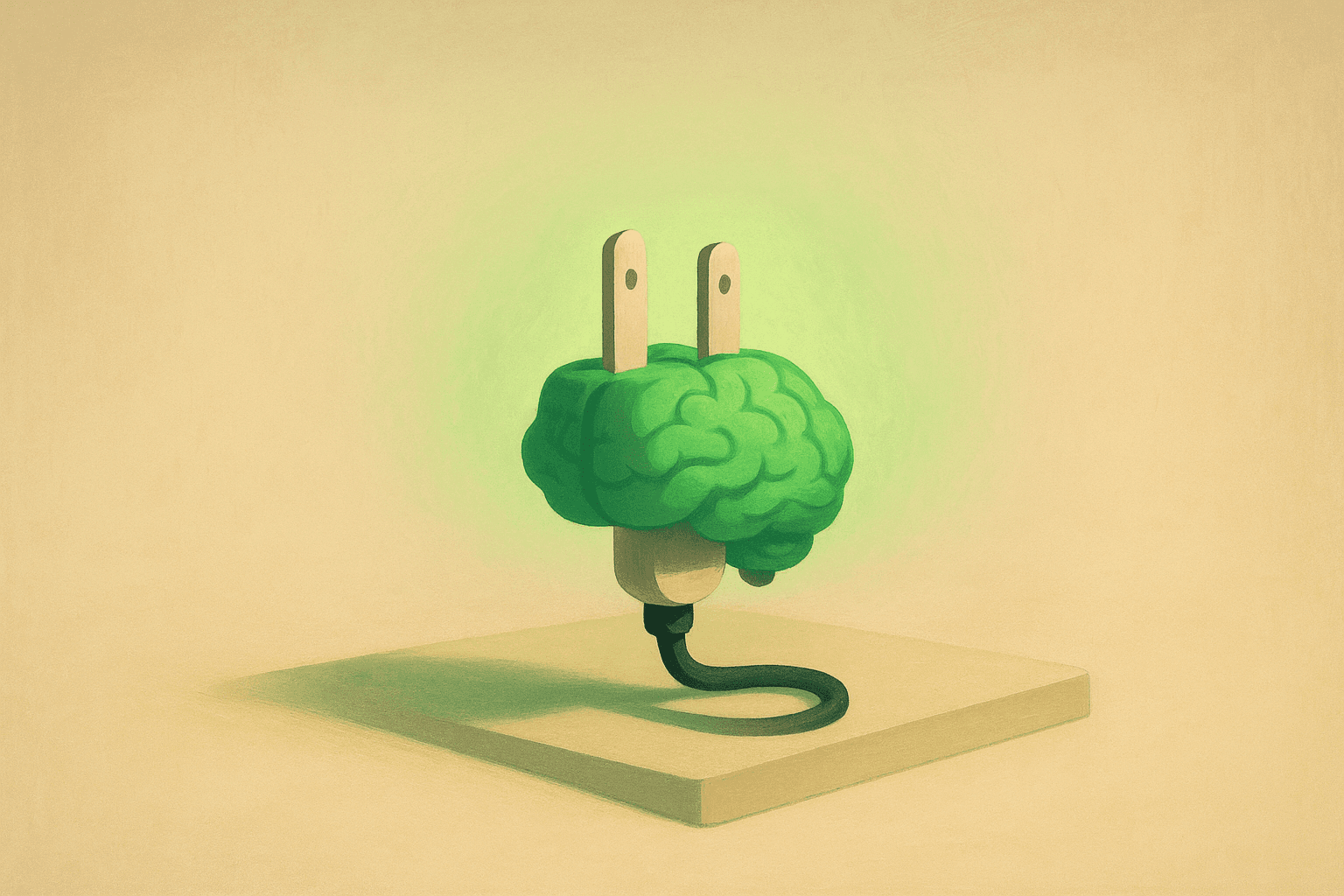
A philosophical approach to deep work starts with a question no calendar can answer: why does this work matter? Philosophy gives deep work its foundation, whether that comes from Stoic attention discipline, Aristotle's idea of human flourishing, or the memento mori urgency about finite time. Most guides stop at scheduling tactics. This one starts where those tactics get their power. Make10000Hours is the behavioral layer that shows whether your philosophy is actually translating into logged hours and real focus sessions, not just good intentions.
What Is a Philosophical Approach to Deep Work?
Cal Newport defines deep work as "professional activities performed in a state of distraction-free concentration that push your cognitive capabilities to their limit." That definition tells you what deep work is. It does not tell you why it is worth doing.
A philosophical approach fills that gap. It asks the prior question: toward what end should you be focusing, and why does that end matter?
Most writing on this topic stops at what Newport calls "the philosophies of deep work." He identifies four scheduling approaches: monastic (eliminating all other obligations), bimodal (splitting time between deep and shallow work), rhythmic (fixed daily sessions), and journalistic (fitting deep work into any available slot). These are scheduling tactics dressed up as philosophies. They are genuinely useful. But they are answers to a logistical question, not a philosophical one.
Actual philosophy asks harder things. Is the work I am doing a vehicle for genuine human flourishing? Am I using my finite hours on what I most value? Does my practice of focused work connect to a life I would endorse from the outside looking in?
Why this matters in practice. A person who schedules deep work without a philosophical grounding tends to burn out, drift toward shallow priorities, or mistake busyness for depth. A person with a clear philosophical foundation knows exactly what they are protecting their attention for. That clarity is not motivational fluff. It is the engine that makes the tactics hold.
Newport himself gestures at this in his source material. He draws on Hubert Dreyfus and Sean Kelly's "All Things Shining" and Alasdair MacIntyre's work on craftsmanship and tradition. The deeper point in Newport's book, which most summaries miss, is that meaning comes from depth of engagement. The philosophical framework was always there. Most readers skipped past it to get to the schedule.
The Stoic Foundation: Attention Is the Only Thing You Control
Stoicism is the philosophy most directly applicable to deep work. The reason is structural: Stoicism places attention control at the center of everything.
Marcus Aurelius used the term prohairesis to describe the faculty of choice, the inner citadel that cannot be touched by external events. Epictetus, a former slave who became one of the most influential Stoic teachers, organized his entire philosophy around the distinction between what is "up to us" and what is not. What is up to us? Our judgments, our attention, our response to events. What is not? Everything else.
In the context of modern knowledge work, this maps directly onto the deep work problem. Your attention is the only thing fully under your control during a work session. The notification is not in your control; whether you look at it is. The open-plan office noise is not in your control; whether you build a practice of ignoring it is.
Seneca on time. Seneca wrote in his Letters to Lucilius: "Dum differtur vita transcurrit," which translates as "while we delay, life passes." The Stoics were not pessimists about this. They treated the finite nature of time as a practical tool. If you truly internalize that hours are non-renewable, the decision to spend them on shallow work becomes almost physically uncomfortable. This is not a scheduling insight. It is a philosophical one.
The Stoic operating system for deep work. A Stoic practitioner of deep work does three things. First, they define what is genuinely within their control during a session (attention, presence, effort) and release everything else. Second, they treat the session itself as a practice of virtue, not just a productivity technique. Third, they accept that interruption, distraction, and failure are inevitable and that the response to those events is what matters, not the events themselves.
The Stoic approach to productivity is not about working harder. It is about working with philosophical clarity about what deserves your hours.
Aristotle, Eudaimonia, and Work That Actually Matters
Aristotle drew a distinction that is remarkably useful for knowledge workers: the difference between energeia and kinesis.
Kinesis is motion toward an external goal. You work to finish the project. Once the project is done, the motion ends and the purpose disappears. The work was instrumental.
Energeia is activity that is complete in itself at every moment of its execution. Seeing is not a motion toward seeing; it is already seeing. Deep, skilled work can function as energeia when the practice itself is intrinsically meaningful, not just a means to an external end.
This is what Aristotle meant by eudaimonia, usually translated as "happiness" but more accurately rendered as "flourishing." Eudaimonia is not a feeling; it is a condition produced by exercising your highest capacities well over time. For a knowledge worker, that means bringing sustained, excellent attention to work that genuinely exercises your cognitive strengths. The flourishing comes from the practice of depth, not from the output.
Why this matters for deep work. Most productivity advice treats output as the only metric. Aristotle would say you are missing the point. The practice of deep focus, sustained over years, is itself part of what constitutes a well-lived professional life. This reframes deep work from a technique into a form of self-cultivation.
The Stoic principles for work align closely with this Aristotelian framework. Both traditions argue that excellent work done with full attention is not just productive. It is part of what a good life looks like.
Eudaimonia and the attention economy. Aristotle could not have anticipated smartphone notifications, but his framework predicts their danger with precision. If flourishing requires sustained engagement with demanding work, then any technology that systematically fragments attention is not a neutral tool. It is an obstacle to the good life. This is a philosophical claim about the attention economy, not just a productivity complaint.
Memento Mori: Deep Work as a Response to Finite Time
The Stoic practice of memento mori, which translates as "remember that you will die," was not morbid. It was a focusing tool.
Marcus Aurelius returned to this practice repeatedly in his Meditations. Seneca devoted entire letters to the subject of finite time. Their argument was consistent: the person who genuinely remembers their mortality wastes far less time on trivial distractions, petty conflicts, and shallow pursuits. Death is the ultimate context for evaluating how you spend an hour.
Applied to deep work, memento mori creates urgency that scheduling systems cannot manufacture. You cannot hustle your way into caring about your time. But you can cultivate, through regular philosophical reflection, a visceral sense of what it costs to spend three hours in shallow distraction.
The memento mori and productivity connection. When Marcus Aurelius wrote "How many a Fabius, Julianus, Macrinus, Celer... died and were buried," he was not being depressing. He was reminding himself, in real time, that the men who came before him are gone and that the urgency of his own work is proportional to the time he has. This practice translates directly: every deep work session is a finite resource. It runs out. The question is whether you spent it on what mattered.
Practical application. The simplest version of memento mori for deep work is a brief reflection before each session: if this were one of my last focused hours, what would I spend it on? The answer reveals a lot. People who practice this regularly report that it makes it much harder to open social media at the start of a session. The philosophical awareness is more effective than any app blocker.
Ikigai and the Japanese Approach to Purpose-Driven Work
Ikigai is a Japanese concept that translates roughly as "reason for being." It lives at the intersection of four elements: what you love, what you are good at, what the world needs, and what you can be paid for. The work that sits at the center of all four is your ikigai.
Research by Michiko Kumano (Frontiers in Psychology, 2017) links ikigai to lower cortisol levels and sustained motivation over time. The mechanism is not mysterious. When you know why your work matters, the resistance to doing it drops. Deep work becomes easier to sustain not because you have better scheduling, but because you have clearer purpose.
Ikigai as a deep work filter. Before you design your deep work practice, ikigai asks you to identify what that practice should be for. If your deep work sessions are serving work that does not sit near your ikigai, you will face constant resistance that no productivity system can overcome. The scheduling frameworks collapse without the purpose underneath them.
Eastern and Western philosophy converge here. Aristotle's eudaimonia and the Japanese concept of ikigai arrive at similar conclusions through different routes. Both argue that sustained excellence requires alignment between your capacities, your values, and the contribution you are making. Deep work is the practice through which that alignment becomes concrete. Without alignment, it is just isolated hours of concentration.
Newport's Scheduling Frameworks vs. Existential Philosophy
Newport's four scheduling frameworks are worth understanding clearly, because they are what most people mean when they say "philosophical approach to deep work." They are also where most people stop.
Monastic. Eliminate or radically minimize shallow obligations to protect long, uninterrupted stretches of deep work. Suitable for writers, researchers, and people whose output depends on sustained creative production.
Bimodal. Divide time into clearly separated blocks of deep work and shallow work. At least one full day per week is reserved for depth. Newport associates this with Carl Jung.
Rhythmic. Build a fixed daily habit of deep work using calendar blocks. Lower ceiling on depth per session, but much higher consistency over time.
Journalistic. Fit deep work into any available slot, switching quickly from shallow to deep mode. Requires strong mental discipline and is not suitable for beginners.
These frameworks answer: when and how should I protect my deep work time? But they do not answer: what is my deep work for, and why does it deserve protection? That second question is where philosophy begins.
The time blocking approach that many people use for deep work sessions is a tactical implementation of the bimodal or rhythmic frameworks. Time blocking is useful. But without a philosophical anchor, blocks get eroded by competing priorities. Philosophy is what makes you defend the block.
Building Your Personal Deep Work Philosophy
A personal deep work philosophy combines three elements: a definition of worthy work, a theory of attention, and an urgency framework.
Define worthy work. Use the ikigai filter. Identify the work that sits at the intersection of your strengths, your values, and your contribution. This does not need to be a single grand answer. It just needs to be specific enough to distinguish sessions that serve it from sessions that do not.
Build a theory of attention. Draw from Stoicism. Your attention is your most renewable yet most underused resource. It is also the only thing fully within your prohairesis. Decide what you believe about attention: that it is a form of respect paid to the work and to yourself; that every fragmentation is a small theft from your capacity; that protection of attention is not selfish but is the basic condition for excellent output.
Create an urgency framework. Use memento mori. Not as a morbid exercise, but as a regular practice. Before each week of deep work, take thirty seconds to acknowledge that this week's hours are non-renewable. At the end of each month, ask whether the sessions you protected actually served your ikigai. The combination of urgency and purpose is what makes the practice self-reinforcing.
Put it on paper. Write a one-paragraph statement of your deep work philosophy. It should answer three questions: what am I protecting my focus for, why does that work matter to me, and what does shallow distraction cost me specifically. Read it at the start of each week. This is not motivational theater. It is philosophical maintenance.
Tracking Whether Your Philosophy Translates Into Practice
Philosophy without data is aspiration. You can articulate the most compelling deep work philosophy in the world and still spend the next month in shallow distraction without knowing it.
This is where Make10000Hours functions as the behavioral layer. The app tracks actual computer activity, detects focus patterns, and shows you the real shape of your work days: session lengths, distraction events, depth patterns across the week. It does not replace the philosophical foundation. It reveals whether that foundation is producing results in the real world.
The gap between philosophy and practice. Most people who adopt a deep work philosophy discover, when they first start tracking their actual sessions, that the gap between their intentions and their behavior is larger than expected. This is not a moral failure. It is useful information. The philosophy tells you what to aim for; the data tells you where you actually are.
What good philosophical tracking looks like. A person who has a genuine deep work philosophy knows what their target focus hours per week should be, knows which types of work count as deep for their ikigai, and reviews their weekly patterns to check alignment. Make10000Hours provides the session data that makes that review meaningful rather than impressionistic. Without measurement, "I did more deep work this week" is just a feeling. With it, it is a fact.
The Stoic feedback loop. Seneca and Marcus Aurelius both practiced daily reflection. Meditations is, in part, Marcus Aurelius holding himself accountable to his own philosophical commitments. The modern equivalent for a knowledge worker is reviewing your focus data and asking: did my behavior match my philosophy this week? Where did it not? What changed?

Frequently Asked Questions
What is the philosophical meaning of deep work?
Deep work's philosophical meaning is that sustained, skilled attention is not just productive but constitutive of a well-lived professional life. Ancient traditions including Stoicism and Aristotelian ethics argue that excellence exercised through demanding work is a form of human flourishing, not merely a means to output. Newport's scheduling frameworks capture the how; philosophy supplies the why.
What are the four philosophies of deep work according to Cal Newport?
Newport identifies four scheduling approaches in his 2016 book: monastic (eliminating shallow work entirely), bimodal (dividing time into deep and shallow blocks), rhythmic (fixed daily deep work sessions), and journalistic (fitting deep work into any available slot). These are scheduling preferences, not philosophical traditions in the classical sense. A genuine philosophical approach asks why deep work matters, not just when to schedule it.
What is the Stoic approach to deep work?
Stoicism treats attention control as the foundation of virtue. The concept of prohairesis, the faculty of choice that remains fully within your control, maps directly onto the deep work problem. Stoic practitioners of deep work protect their attention as a core discipline, use memento mori to generate urgency about finite time, and treat distraction as a failure of prohairesis rather than a scheduling inconvenience. The Stoic approach to productivity makes deep work a philosophical practice, not just a technique.
How does eudaimonia connect to deep work?
Aristotle's eudaimonia describes human flourishing through the sustained exercise of one's highest capacities. Deep, skilled work is a vehicle for eudaimonia when it engages your cognitive strengths and aligns with your values. The practice of deep focus over years is itself part of a well-lived professional life, not just a means to deliverables. This reframes deep work from productivity tactic to form of self-cultivation.
Does deep work rewire your brain?
Research on neuroplasticity supports the idea that sustained, focused practice strengthens the neural circuits associated with the practiced activity. Newport cites this in connection with deliberate practice. Philosophically, this connects to Aristotle's account of virtue: habits of attention, repeated over time, become character. The practice of deep work is also a practice of becoming the kind of person who thinks deeply.
How do I know if my deep work philosophy is actually working?
Track your actual focus sessions rather than your intentions. Tools like Make10000Hours measure real session lengths, distraction patterns, and focus consistency across the week. If your philosophy is working, you should see increasing session depth over time and better alignment between your planned deep work and your actual computer behavior. Philosophy without measurement stays aspirational. Data makes the feedback loop real.
Can memento mori actually improve my focus?
Yes, and the mechanism is straightforward. Regular reflection on finite time reduces the psychological tolerance for trivial distraction. When you genuinely internalize that each session is non-renewable, opening social media at the start of a work block becomes harder to justify. Marcus Aurelius used this practice daily. Seneca built an entire essay around it. The memento mori and productivity connection is one of the oldest and most reliable in the philosophical tradition.
What is ikigai and how does it apply to deep work?
Ikigai is a Japanese concept describing work that sits at the intersection of what you love, what you are good at, what the world needs, and what you can be paid for. Research by Michiko Kumano links ikigai alignment to lower stress and sustained motivation. Applied to deep work, ikigai functions as a filter: if your deep work sessions serve work at the center of your ikigai, you will face less resistance and more natural commitment. Scheduling discipline becomes easier when purpose is clear.
Is there a best time of day for deep work?
This depends on chronotype, but the philosophical answer is more useful: the best time for deep work is whenever you have your best attention available and have made a deliberate choice to protect it. Stoic discipline means not waiting for the perfect moment but choosing the best available one and defending it. Most people have a 2-4 hour window of peak cognitive clarity. Identifying and protecting that window is a philosophical act as much as a scheduling one.
Start With the Why, Then Track the How
The philosophical approach to deep work does not replace Newport's scheduling frameworks. It gives them their foundation. Stoicism provides the attention discipline and urgency. Aristotle provides the account of why excellent focused work is intrinsically valuable. Memento mori provides the sense of finite time that makes protecting your sessions feel non-negotiable. Ikigai ensures the work you are protecting actually deserves your best hours.
Without that philosophical grounding, deep work is just a scheduling preference. With it, it becomes a practice aligned with a specific vision of what a well-lived working life looks like.
The final step is measurement. Philosophy tells you what to aim for. Make10000Hours shows you whether your actual behavior is tracking toward it. Deep work philosophy without behavioral data is aspiration. With it, you have a feedback loop that makes improvement concrete and ongoing.
Start tracking your focus sessions at make10000hours.com and find out whether your philosophy is translating into practice.
Related articles